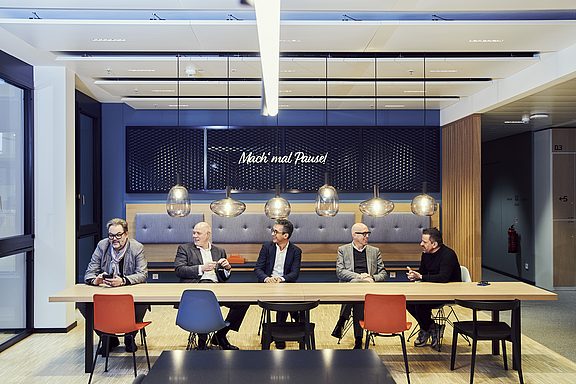
At the end of last year, architecture journalist Alexander Gutzmer wrote an essay for the Neue Zürcher Zeitung newspaper arguing that even after two years of working from home, companies still need to build office buildings in cities in order to maintain their presence in society. Has working from home shaken the foundations of the office so much that an archetype and thus a part of our building culture is in danger of disappearing?
José Martinez (JM): I hope not! But if we continue to hide away in our caves as we have done for the past two years, theoretically that could happen. I don't want to imagine what that would mean for us as humans, but also for our cities. For centuries, our cities have been places of communication, commerce, life, and death. They have survived wars and disasters, and now two years of pandemic are finishing them off – I don't want to believe that! To prevent this from happening, I am counting on us eventually recognizing and understanding that communication and personal exchange are essential basic needs for us humans and that the city is an important place for this exchange. And that requires us as entrepreneurs and companies to continue investing there. Then perhaps the city will return to what it once was. After all, the city also means routine or rhythm – going to the office in the morning, returning in the evening – and the same thing again the next day. A significant part of urban society thrives on this.
Ulrich Bäcker (UB): I see it similarly. A lot has changed, we will continue to feel the effects of cutbacks, and things will never be the same as they were before. The overall trend is toward less space with higher quality. We were already somewhat ahead of the curve with our new building here in Niederrad, providing eight workstations for ten employees. The pandemic has confirmed this. But that is only a prelude to what awaits us in the coming years. Informal exchanges do not work from home via the Internet. We have also observed that employees can no longer orient themselves towards better colleagues. A bit of corporate culture is being lost. That is why we, and many other companies, have a great interest in bringing people back together.
Holger Meyer (HM): I am observing the increasingly polarized debate about where and how we will work in the future with great interest. In the middle of last year, the consensus was that it was best for everyone to work from home. Now, however, there are growing voices emphasizing the benefits of working together in person again. Companies need to do something to get their employees back into the office. At the moment, many companies are still rather helpless in this regard: everything from classic to a 50:50 ratio of collaboration and team areas to workstations is on the table. This shows us that the search for an answer to this question has begun. However, there are currently no "out of the box" solutions.
Raphael Gielgen (RG): I would argue that there will be a new asset class in the future. It's like the typewriter, which didn't disappear from offices overnight, but at some point it was gone. In the second half of this decade, we will see projects that can no longer be classified solely as office assets. That's why I think the classic office as a building typology will disappear, because in my view it was a mistake. I once organized so-called Shark Tank sessions for a closed-end real estate fund, in which scenarios for future developments were matched with experts. One of the match partners was Julia Erdmann from "JES Socialtecture," and she defined large parts of the fund portfolio as pure financial products that were conceived and set up as such and not developed from the idea of architecture for people. People were secondary in the development of the products, which is why many buildings and spaces look the way they do today.
UB: In the past, 60 people sat in a room in front of their typewriters – today, robots and AI do the job. We mustn't forget this impact.
RG: But the automation of knowledge work will be unstoppable. And for the generation after us, that's not a horror scenario. They already work with digital tools as a matter of course and in a much more contextual way. They are conditioned by screens and much more visual content. And that is basically the new space of tomorrow. What do we offer these young people? In Frankfurt, there is now SPARK, a property dedicated to VR conferencing and hybrid working. An entire building, brimming with technology and huge video walls on which the context of a question can be visualized directly. This will be a central theme of tomorrow's work.
JM: I have the feeling that the world is spinning a little faster than it is here in Germany. Digitalization is still a challenge in so many areas. We have lost touch internationally. But I firmly believe that in this discussion, we are becoming more and more aware that WE are actually the measure of all things. If that is lost, then we will disappear into the metaverse all the faster.
Gregor Gutscher (GG): It's about designing a counterpoint to the digital world of work. In the future, we will work in real time in fully digitized rooms with huge monitors, in AR and VR. Then table tennis, mini golf, or a terrace will be real life, where I can meet people. I like to compare it to the Biedermeier period. That emerged as a counter-movement to industrialization, to have nature and naturalness around me and not just smoking chimneys.
JM: It's the longing for something real, something you can touch and smell; meeting someone in real life and whether or not their aura captivates me. We decide so much based on our senses. All of that is lost online. Just like respect. I show my colleagues respect when I go there to meet them and engage with them. I also wear a tie because I want to show respect.
RG: Respect – nice image. Wolfgang Grupp, the owner of TRIGEMA, was recently on Philipp Westermeyer's podcast. He always looks immaculate. When asked about this, he replied: My clothing is a gesture of respect towards you, and I do the same for my employees. How you dress and come to the office has something to do with how you value the person you are meeting. I see this as an opportunity, but also as a social challenge. I was recently in Japan. The Japanese have a wonderful consensus in many areas, a basic social order that gives the country stability. We are increasingly losing this because we are developing more and more into a society of individualists. Where is respect supposed to come from? This is where the collective, the team, comes in.
HM: We have seen for ourselves what working exclusively remotely can do. On the one hand, many details are lost, but on the other hand, things happen because of the distance that would not have happened in person. Physical encounters are necessary to reduce aggression, difficulties, and communication problems by simply sitting down together. This does not work via electronic media.
UB: We have been observing this for some time in electronic communication. The inhibitions are already quite low, and when things get more stressful and the pressure increases, this increases. I always say: Stop with the emails, sit down together and tell each other what you think to your face – that will be more respectful.
JM: Perhaps the new asset is what we understand today as the term "neighborhood." A good neighborhood offers its residents and users every opportunity to develop. We have to transfer that to buildings. We have that in large developments, such as FOUR in Frankfurt. But there, we also have everything in one place, and even there, we paid close attention to how it would fit into the city later on. It is important that such buildings are embedded in their surroundings and that you take a very close look at what is on offer around them. What you have to create with a new project is added value that needs to be curated. We saw what happens when that doesn't happen here in the Niederrad office district, but fortunately that has already changed. Companies that know the local market well are likely to invest more sustainably than anywhere else. We have more and more buildings in development that make a significant social contribution to their neighborhood.
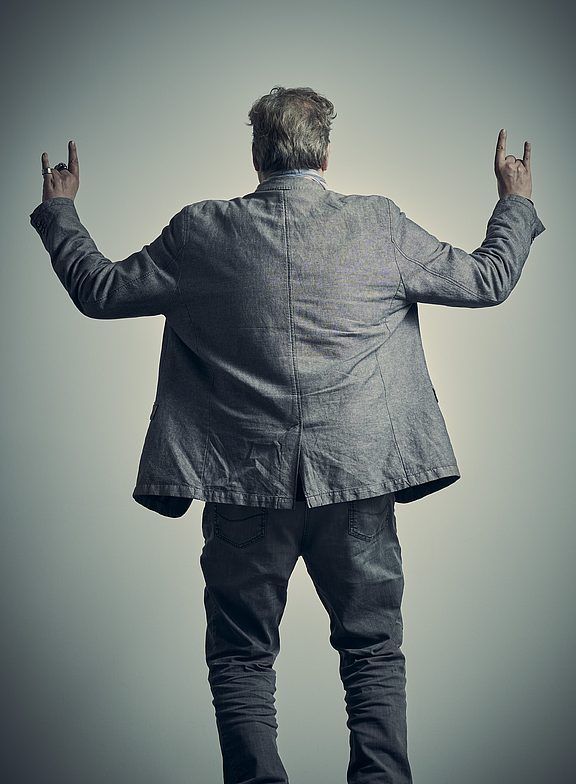
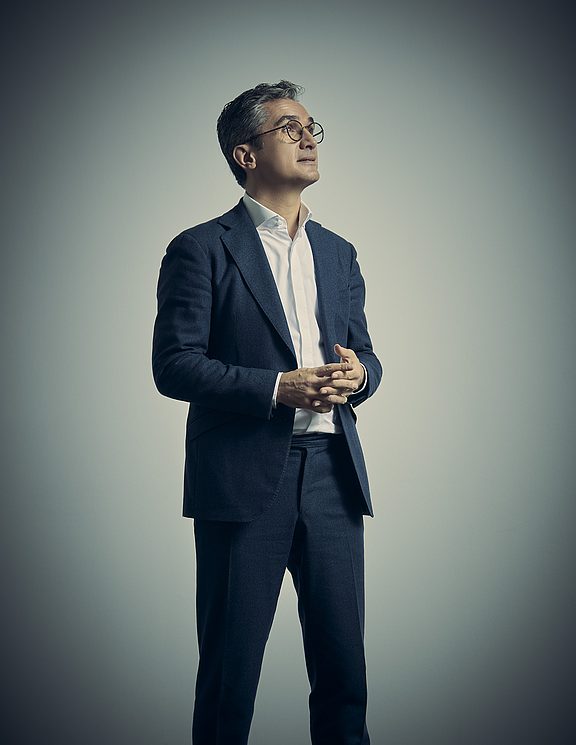
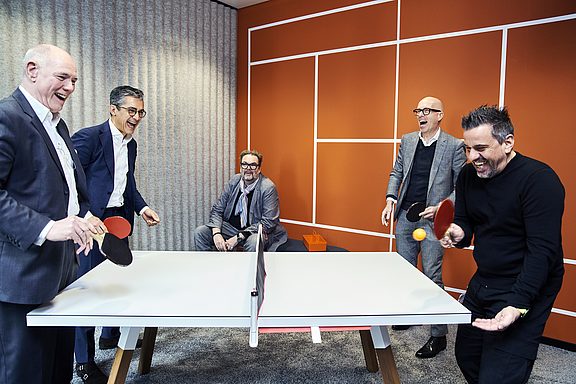
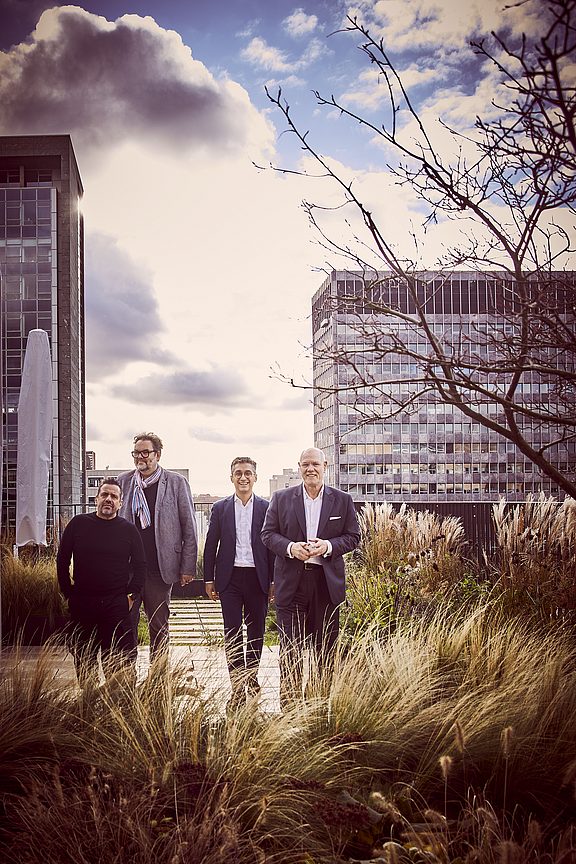
RG: I think the neighborhood theme is very apt. But what will happen in all the offices in the future? We will be working more on new business models and reinventing organizations, and the content of the work will determine what the offices will look like. The transformation of the economy is the new Herculean task. The urban system needs to be rethought in cities like Frankfurt, and to do that, developers, architects, and all stakeholders in the process need to sit down with the city. In Singapore, this was implemented pragmatically during the pandemic because suddenly locals were doing the jobs that Europeans, Americans, and Australians had previously done. They asked themselves: How should our city function in the future? Where will production take place, where will learning happen, where do we want to live? The entire city was restructured. And that is an ingenious foundation for all subsequent players. How about applying this model to Frankfurt, rolling out this neighborhood idea across the entire city, and turning it into a kind of master plan? In Singapore, there are no longer any single-tenant buildings; instead, everything is mixed.
GG: People have always needed a certain structure to get through their daily tasks. Over time, we have learned to live and work in well-established rhythms. That has now changed radically, and new spaces and places are needed to accommodate this. How did this develop? As a marketplace, a forum where a wide variety of functions were attached. We now need places where we can come together again, whether to work, live, or celebrate. This can sometimes work over the airwaves, but not exclusively.
UB: Today, urbanity in buildings is in high demand, as are mundane things like windows that can be opened. These issues have also become increasingly important in ESG and sustainability.
JM: I just received another ESG requirements profile in which a key component of the "S" is windows that can be opened in offices, because everyone can control them individually. But the fact that sustainability aspects are coming to the fore in decisions is a fairly recent development.
RG: I was in New York in September last year and spoke to researchers from the real estate industry about the situation there: the average age of all office properties there is 80 years. However, the industry currently generates 70 percent of its income with only 40 percent of the real estate portfolio. This 40 percent consists of new buildings or new neighborhoods that were built after 9/11. Iconic buildings are also always in demand. They now have such high sustainability standards that they are always in demand. Their biggest problem is that the old buildings have such low ceiling heights, such large building depths, and such large footprints that there is no reuse for them. Bloomberg has commissioned Gensler to figure out how to hack this. Some of these properties are so-called "stranded assets." And they are a problem for everyone, owners, companies, the city, the population—they all need to sit down together! This could also be approached differently. With more involvement from the population. In other words, a hackathon—Hack the City. I think that would be cool.
HM: That brings us back to the master plan. That's actually the underlying theme. The new asset class was the keyword; offices as we knew them will no longer exist. But we have a lot of space, whether we call it office space or not, that we will no longer need.
UB: The city of Frankfurt am Main, the German Architecture Museum, and we have just awarded the International High-Rise Award to a refurbishment and new construction project in Sydney. This shows where things are heading—the combination of old and new. Stripping down old buildings and creating new ones. Of course, there will always be new buildings or parts of buildings, because what you want or need may not work as revitalization, or may only work in part. In addition, there is asset exchange – office stock is demolished and apartments are built in its place, which we need more urgently. The best example is the Niederrad office district, where there is a political desire to suddenly create housing between the office buildings, thus bringing urbanity to the neighborhood.
HM: We had already been looking at more hybrid building uses long before COVID-19, as changes were also becoming apparent in other areas of cities. The slump in inner-city retail alone has suddenly made large areas of isolated inner-city locations available. We will also be considering these areas and developing hybrid systems for these locations that will ensure a completely different quality of work and life.
How important do you think it is to allow public access to office buildings?
JM: That's the key. Ground floors need to open up and become zones for communication and interaction. They need to become lively places with a variety of offerings, both inside and outside. There needs to be a mix.
UB: But that only works in cities where the environment is right. Out in the suburbs, like here in Niederrad, it's still rather difficult. The mix of residential, office, and services has yet to develop. It's like the shopping centers of the 1980s that sprang up in the countryside. At first, there were only stores. Then a food court was added, along with leisure activities such as cinemas, go-kart tracks, and bowling, so that a trip to the shopping center became an experience. That's how we need to think about offices today.
HM: It will just work differently in offices. The first step has been to create different spaces in offices, whether it's a gaming lounge or table soccer. It's about interacting and doing something different, getting each other excited. And that has to be transferred to the hybrid systems of the future. At Mind Space in Tel Aviv, I attended a kind of convention where the managing directors and founders of 20 completely different Barclays Bank start-ups sat down and presented and discussed their ideas and goals, with 360-degree feedback. This openness requires a different mindset and also special places that invite people to share knowledge. In my opinion, these are the new asset classes of buildings.
JM: A lot has changed here in recent years. In the past, the Excel spreadsheet would say: 60 single offices, 20 double offices, 70 open-plan offices for X people. There was no concept, let alone collaboration areas or a well-thought-out style like here at Deka. Here, everything is implemented in different setups: sometimes a round room, sometimes a standing table, sometimes height-adjustable, sometimes a long one, sometimes a U-shaped one – the optimal environment for different situations. That's exactly what you need.
UB: But the crucial question is: What do I offer my team, what do people want? Where and how do they want to come together? Not just in an office, but where things are happening. In spaces that are a bit spacy, so they can work creatively.
JM: Everything has to make sense and be well thought out for the overall concept to work. Just having stylish Vitra furniture isn't enough. No, I have to put my heart into it. That's why offers that create added value are crucial. If people feel comfortable, every cent spent on the furnishings is money well spent. And those are the important things that employers should be thinking more about. Like here at Deka, which not only offers its employees stylish rooms, but also breathes life into the entire building and welcomes everyone. And in my opinion, the office is just one of many hooks. It's about the company's social network. Working from home is another aspect and has been legitimate since before Corona; it's just being discussed more now.
UB: That's why I believe the office will not die out. It will just look different. It will become more open, more communicative, and more agile. Mindless office work is a thing of the past. Today, these are all high potentials who work at 150 percent for two or three hours and then need phases in which they can wind down. Really hitting the gas as a team as a shared experience and then a round of darts or table tennis. That's agile working, too. So it's not a question of the building as such, but of the layout and the work that takes place in it. Not 80 percent work and a bit of fun on the side, as it used to be, but only 50 percent work, with the rest being communication, agility, and leisure. Team building – you don't do that on a screen, you do it in person. You need something in common that brings the team forward, and for that you need spaces that offer something beyond the purely business-related.
JM: And who pays for all that?
HM: I'm less concerned about that. Companies always do what they have to do from a purely economic point of view. Now companies are asking themselves what they need to offer their employees in order for them to choose them. That's the war for talent, and that's the driving force.
UB: It's getting smaller, more efficient, and therefore cheaper. Many companies are already doing this: reducing space and redistributing it. Instead of going from 100 to 50, they're staying at 75 percent, and that extra 25 percent is being devoted to communication, interaction, and agility so that they generate added value.
HM: But there will also be companies that continue to pay 100 percent for 75 percent of the space because they get a better location and better quality, and that benefits their business case more. It's not primarily about cost reduction, but about a building with better qualities.
UB: One of our tenants in London has integrated a few hotel rooms into its space where employees can also stay overnight if they work late. We make a clear distinction between the office and home. There is a clear boundary. What Google is doing in Chicago, for example, shows alternatives: a new office complex was built in a neglected area. They bought up and renovated entire neighborhoods around it to attract talented people. And that's what you end up with: a neighborhood, a working environment in the center, and residential areas around it. Not under one roof, but close by – short distances.
JM: In doing so, you also give something back to the city, to the neighborhood, and enhance its value. A café, good apartments, and the city provide a good infrastructure. That's very important.
UB: Urbanity paired with affordable living and working space is almost impossible in today's major economic centers, whether it's Frankfurt, New York, Chicago, Paris, or London. It's far too expensive. So you have to leave the city, but the infrastructure can't keep up. Where will we meet in 15 years to see how things have developed?
JM: Hopefully here again.
RG: Our generation demands that we meet in person.
HM: The influx into cities will continue. The housing problem will remain and intensify. The general public will not have the opportunity to work from home. The spatial conditions are not available to the extent that is written about in many articles today. I think a lot will happen in this area. In 15 years, we will have something hybrid between home and office, which will take place outside of companies. Places where we can come together in a more collaborative way, where we can also work in our free time.
UB: I don't think that much will change dramatically in 15 years. The trend that is emerging today will continue and be optimized, but I don't think it will be completely different. We humans want to come together.
Thank you very much for the interesting conversation.