
We met Reinhold Knodel in Munich's Werksviertel district to discuss the state of the residential and office real estate industry after COVID-19 and in light of ESG and EU taxonomy.
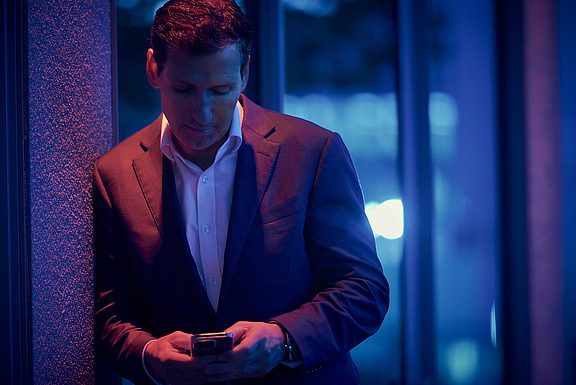
Reinhold Knodel, CEO and sole shareholder of PANDION AG
After completing a carpentry apprenticeship and working as a police officer, Reinhold Knodel studied business administration with a focus on real estate, laying the foundation for the establishment of PANDION Real Estate GmbH and other subsidiaries. In 2007, Knodel brought these companies into Cologne-based PANDION AG, which is now one of Germany's leading project developers. Knodel is a member of the Board of Trustees of the Real Estate Management Institute at the European Business School, a member of the Municipal Council and the Project Development Working Group of the German Property Federation (ZIA), and a member of the association "Die Familienunternehmer" (The Family Entrepreneurs).
Mr. Knodel, your company, PANDION AG, started out in 2002 as a pure residential construction company. In recent years, however, you have developed a second pillar of business with the development of office properties. Holger Meyer Architektur is currently planning two commercial properties for you in Munich's Werksviertel district: "OFFICEHOME Beat" and "OFFICEHOME Soul." What do you expect from the office market of the future? How will it develop?
Reinhold Knodel (RK): One of PANDION's current focal points is the development of inner-city neighborhoods. These are usually heterogeneous structures in which the two asset classes of residential and office are closely linked, especially when we talk about urban development. In my view, holistic neighborhood development requires mutual consideration of both commercial and residential properties. That is why we decided seven years ago to enter the commercial market more intensively. Five years ago, we began to purchase commercial projects in a targeted manner, independently of our own neighborhood developments. This explains why PANDION continues to push the office sector. Although residential properties still dominate our investments, up to 60 percent of our balance sheet and cash flow-effective income now comes from our office projects. This asset class is therefore very important to us, and we continue to view the future of the office market positively – both in terms of rentals and investment. If we were offered a residential and an office project today, we would give preference to the office project. Last year, we acquired mostly commercial projects. The fact that this step was the right one is also proven by the "OFFICEHOME Soul" here in Munich's Werksviertel district. We purchased it in 2018 as a purely residential project. There was then a legal dispute over the development plan, in which we fought for two years to have a residential and socially acceptable development plan drawn up – but without success. Now we are realizing two commercial projects here together with "OFFICEHOME Beat." In retrospect, nothing better could have happened to us.
You coined the term "OFFICEHOME" for your office properties. What is behind it?
RK: The pandemic has changed the world of work, and in our view, this has consequences for the office on the conceptual side. Our answer is the "OFFICEHOME," a glimpse into the office of tomorrow, in which components from the home are integrated into the office to give the workplace more atmosphere and personality. What irritated me was the often-expressed idea that we will no longer need offices in the future because working from home will replace the office workplace. How is that supposed to work? Working from home is of course justified – for a few days. But the companies that sent their workforce to work from home with great enthusiasm during the pandemic will ultimately feel the impact on productivity. These companies are now struggling to get their employees back into the office. But unfortunately, that's not so easy. The office has its place in terms of productivity, but it is also an essential building block for corporate success, especially when it comes to communication and socializing. When I think of the work of architects, for example, creativity cannot take place digitally, or only to a limited extent.
Holger Meyer (HM): As an architect, I can confirm that this does not work. There is a lack of direct and spontaneous exchange, which is what teamwork is all about and does not work via "teams." We are also seeing massive problems with some of our customers: I was recently at Deka in Niederrad, for whom we have currently built a new building with 3,500 workstations in Frankfurt. I arrived on a Monday morning and there were only about 800 people logged in. Management told me about the problems they have getting people to come to the office on Mondays and Fridays. There are now visitors who only come on Mondays or Fridays because there is less traffic then.
RK: That's why we said we would combine our experience in residential construction with our expertise in the commercial sector, call it "OFFICEHOME," and thus create two key arguments in favor of the office: "OFFICEHOME" combines the best of both worlds and generally offers a more professional work environment than the kitchen table at home. Then employees will prefer to go back to the office. Because there they can meet their colleagues in person in the lounge for a coffee or a beer after work, and urban life beckons right outside the door. For me personally, that sounds more interesting than sitting at home in the kitchen somewhere on the outskirts of town. The second aspect is the war for talent. Companies need attractive spaces for this. For the younger generation, money is becoming less and less important. Soft skills are more important to them. These skills determine who their future employer will be. The workplace has to respond to this. And one key factor is the atmosphere. Or, as my daughter would say, "the vibe."
Gregor Gutscher (GG): As an architect, I naturally ask myself what is happening now in residential construction, which we have increasingly optimized in terms of space in recent years. What impact does this have on apartments and residential buildings? If people who live far away don't want to commute to the city every day, but also don't want to work at home at their kitchen table, there needs to be something in between. In Gmund am Tegernsee, I noticed the first co-working space in a rural area. That's where I have these qualities. I spend my home office day there, focused, and I meet people. From my point of view, this has consequences for how we should think about and design housing in the future.

RK: In my opinion, co-working units in neighborhoods or, as here, in remote areas are the right approach. They offer the opportunity to spend the day working from home in a professional atmosphere with the appropriate technical infrastructure. This is certainly a good substitute for the kitchen table, but it does not solve the problem of the lack of spontaneous interaction with colleagues in the company. It's not just about employees becoming isolated, but about them engaging in professional exchanges with colleagues that enable them to work more productively and move the process forward. In a coworking space, they are more likely to meet someone from another industry by chance. The likelihood of these being productive conversations is rather low. But what we have been hearing constantly for two years is that housing construction needs to be completely revamped and that all apartments need an extra room for a home office.
HM: Then we just need to figure out who's going to pay for that room.
RK: Right, that's a pretty important point! There's a well-known reason why apartments in cities have been getting smaller and smaller. There's a lack of building land in densely populated urban areas, which drives up the price of building plots and, as a result, the price per square meter keeps going up and apartments are getting smaller. Nothing has changed in that regard. Of course, everyone in Munich would like an apartment with one more room. But just because working from home is now in vogue, no one suddenly has an extra $150,000 in capital at their disposal. Modernism postulated a spatial separation between life, living, and work. Newer and more sustainable concepts such as the 15-minute city are bringing these areas back together. What influence do such ideas have on your developments?
RK: This idea is clever and entirely justified. For me, a lively neighborhood has an incomparable quality. We are currently developing a huge former scrap yard in downtown Cologne, known as the Max Becker site. And of course, we can incorporate all areas of urban life there: residential and office space, schools and kindergartens, small retail outlets and local amenities. And art and culture, too. We are working on this and we will implement it. This also includes a sustainable transport concept. Because the best concept is one that prevents traffic from arising in the neighborhood in the first place. In your
opinion, what responsibility do politicians and cities have in the development of future living and working environments?
RK: The influence of politics and administration on the real estate industry is sometimes somewhat overestimated. They can't really do that much. The best example: in 2022, the federal government set itself the goal of building 400,000 apartments. I think that's great in principle, and it's a very wise decision. But how can federal policy ensure that these apartments actually get built? The federal government can only influence the housing industry within the framework of federal legislation. At the municipal level, the issues of building rights, development, and connectivity are addressed. This essentially outlines the scope for action. In my view, it is more the real estate industry that can contribute to the life and quality of neighborhoods and houses through utilization concepts.
RK: I think we are quite well positioned in this regard. We have established our own subsidiary, PANDION Engineering, which deals explicitly with the topic of sustainability. We are members of a number of organizations that conduct research in this area. We draw our insights from this and then pass them on accordingly. The topic of ESG and taxonomy is absolutely set. We do everything that is reasonably feasible in this area. We have our own teams dedicated solely to this. I encourage them to look for topics that have a real sustainable impact in terms of improvement, whether in terms of CO2 emissions or material and raw material consumption. And that's why we've now also joined the Madaster database, to make it easier to record which materials are contained in the building and how they can be recycled. These are the issues that really concern us. But much of what is happening in the area of sustainability is, in my opinion, just superficial activism. Take green facades, for example—they are very popular right now, but their energy balance is negative, and the contribution to the microclimate that is often cited does not compensate for this. That is why it is important to always question the purpose of every measure. This also applies to refurbishment. The most sustainable building is one that will remain standing for 200 years. Unfortunately, commercial properties today have a life expectancy of only 30 to 40 years. The buildings we are purchasing today for new project developments date from the 1980s and 1990s. For example, we still often see the problem of low ceiling heights, which inevitably leads to demolition and new construction. This is ecologically and economically disastrous. That is why we must design buildings again in such a way that they will last 100, or better still, 200 years. My appeal to architects: follow fashion less in your architecture and instead design buildings that people will still enjoy looking at in 50 years' time and that can be easily adapted and updated.
HM: That is what sustainability means in the best sense of the word.
RK: Most of the gray energy is contained in the shell and the construction. If we plan intelligently now, then perhaps a hotel, an office, or even residential space will fit in. Then we will have made a truly effective contribution to sustainability.
Will we be dealing with large vacancies or stranded assets in our cities in 20 years' time due to strict ESG guidelines and EU taxonomy? What impact will such a scenario have on our cities?
RK: The beauty of the real estate industry is that supposedly irreparable mistakes can be corrected by demolition and new construction. However, whatever is built in its place should be done so intelligently that it won't need to be redone in 40 years. Real stranded assets only arise where conversion is not possible and the owner is not prepared to demolish and rebuild. This is a real estate issue, but it is also in the interests of urban society and the community. However, I cannot imagine that a property owner could afford to do this. Either they find a use that generates income, or they tear down and rebuild. At least, that's true for urban centers. We will have to redevelop or perhaps even dismantle regions and locations that will eventually no longer have a raison d'être. Don't get me wrong, I don't want to destroy rural areas, but we need to be more flexible from an ecological and economic perspective. Because there will be neighborhoods, small towns, or villages where no one wants to stay anymore. As urbanization progresses, more and more people will move to the cities. But this also presents an opportunity: we can dismantle and renature the areas—that makes ecological and economic sense. In the city, I have everything I need. I don't have to travel far. That's sustainability, not just a green facade. But we need to think one step further and be less sentimental. And then we come to the topic of structural change in cities, where current developments in the retail sector run counter to the swan song of the Corona era. Retail is not dead, it is just evolving differently. Sales are generated differently, and the requirements, the environment, and the reasons why people come to the city are different.
HM: However, this transformation will have a significant impact on our city centers. If we break down these monofunctional department store structures, I see great potential for finding suitable properties or structures for hybrid uses. And combining residential and office space will make it more interesting and exciting. But even here, there is still some work to be done in the minds of those responsible. They are already quite active, but they are still lagging a little behind the development.
RK: But that's a fantastic opportunity. Department stores are no longer in keeping with the times, although the ground floor and first floor may still have their place. Above that, we can build apartments or offices or hotels – it couldn't be more urban. The city is not dead. It is just changing.
A nice closing remark. Thank you very much.