COMPLETE PLUS ****
In order to continue operating an existing building economically, it is sometimes necessary to make changes to the structural design and cubic volume in order to optimize utilization, expand space, and improve access and floor layout. Legally permissible additions or extensions compensate for any loss of space. Access and development, as well as the tectonics, are adapted to meet the new requirements. The goal is a completely new building that is both contemporary in design and technology and once again marketable in all respects.
| LOCATION | Zeil 121, Frankfurt am Main |
| TYPE | Revitalization of a retail building |
| CLIENT | DPI Deutschland Plus Invest GmbH & Co. |
| FLOOR SPACE | 10,915 sqm oi |
| CATEGORY | Office, retail, and commercial |
| YEAR OF CONSTRUCTION | 2002, Architect: Jo.Franzke |
| IMPLEMENTATION PERIOD | 2002 |
| SERVICE PHASES | 1 – 8 (artistic supervision) |
Retail in transition – everyone is talking about it. Our ONE TWO ONE project in a prime location on Frankfurt's main shopping street, Zeil, is perhaps one of the best examples of what a possible answer might look like. Originally built between 1999 and 2001 as a new department store for Marks & Spencer, this building quickly underwent a transformation into a multi-retail use with Esprit as the main tenant and Saturn and Depot as additional users, and has had to prove its flexibility on several occasions.
After more than 20 years, however, the world of retail has changed completely, even in the best and most frequented downtown locations – a multi-story retail space no longer meets user demand, even here. After Saturn and Depot moved out and the main tenant Esprit went bankrupt, the question arose of what to do with the existing building fabric.
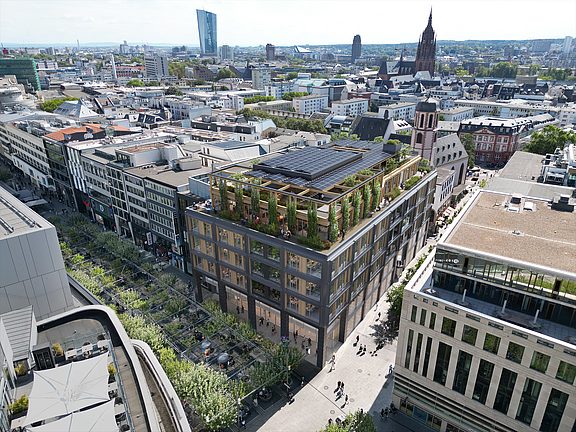

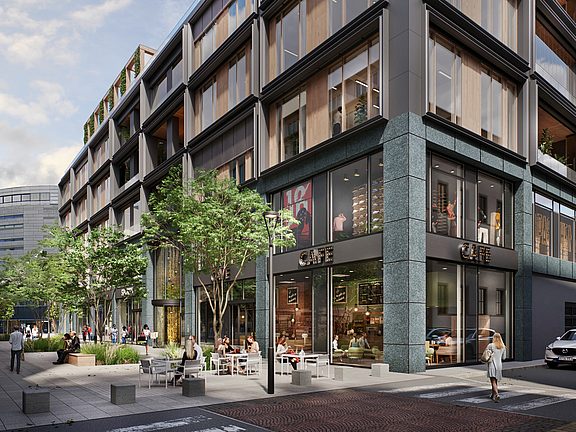
The owner, together with Hines Development, conducted an invited competition, which we were able to win with a consistently existing-building-based solution against renowned competitors.
Hines does not refer to this as a "refurbishment," but rather as a "redevelopment." Why? In this project, a completely new building use is being "developed" into the existing structure of a special-purpose property—a multi-story department store.
This task presents special challenges for all those involved. Since the upper floors of the department store are no longer in demand for commercial use by the market, it was clear from the outset that at least the second floor and above would be used as office space in the future.

1999 to 2001: Originally constructed as a new department store for Marks & Spencer
Transformed into a multi-retail use with Esprit as the main tenant
Subsequent vacancy
• Central downtown location on the main shopping street Zeil
• High retail floors
• Multi-story retail space
• Existing escape routes
• Existing department store structure of a special-purpose property
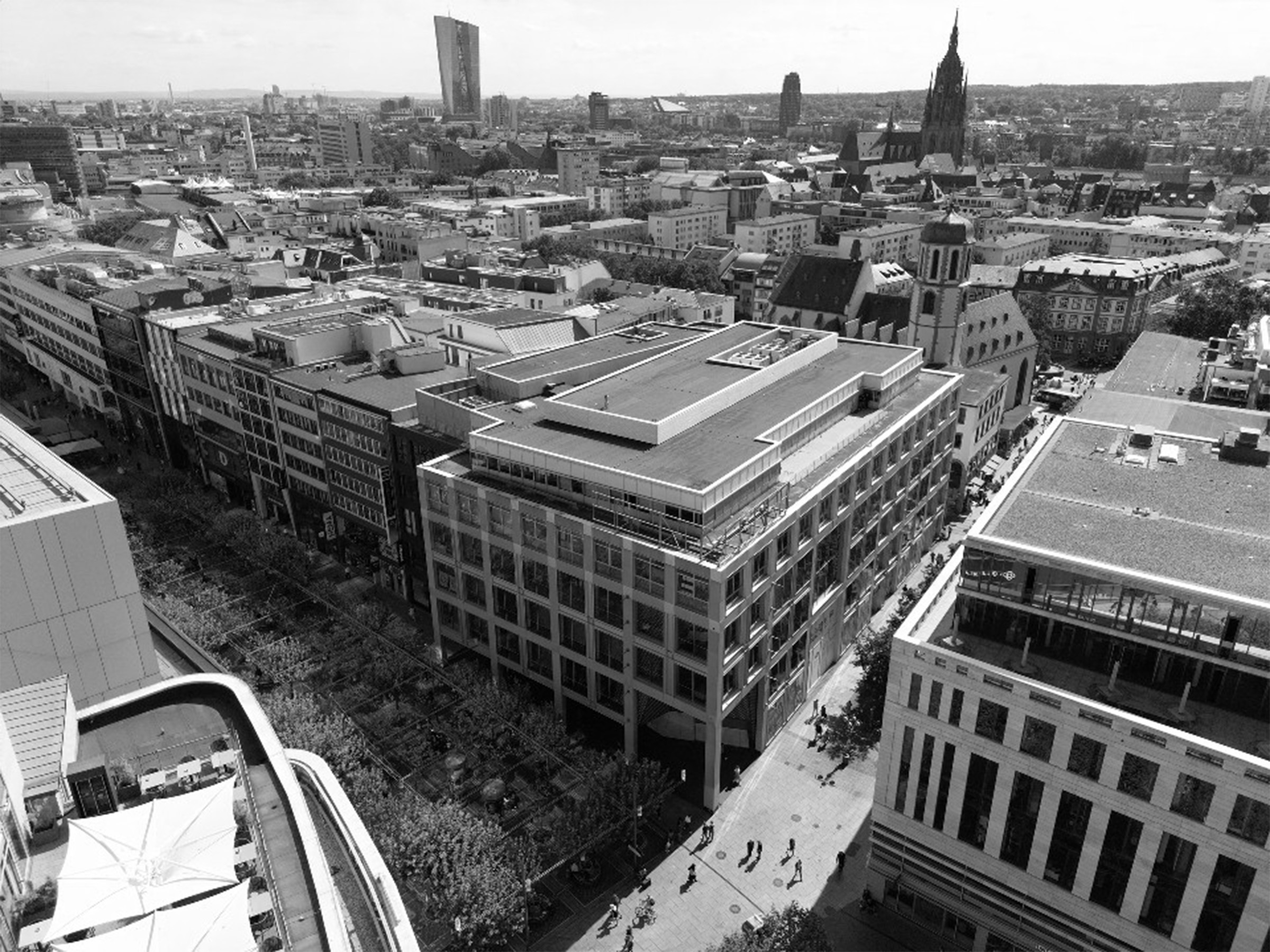
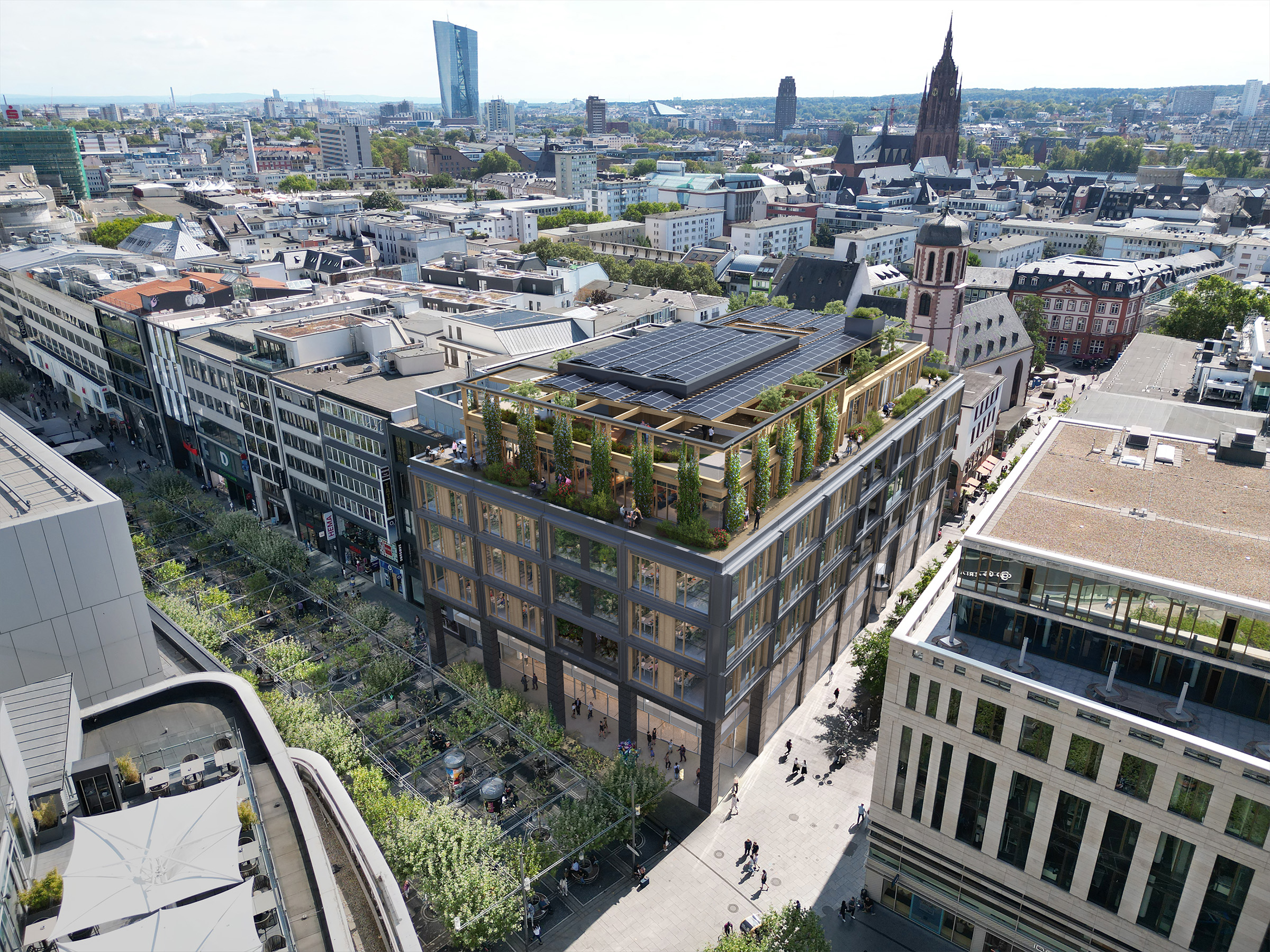
Reuse of the existing building structure
Floors
• Demolition of the top administrative and technical floor
• New staggered floor in hybrid timber construction
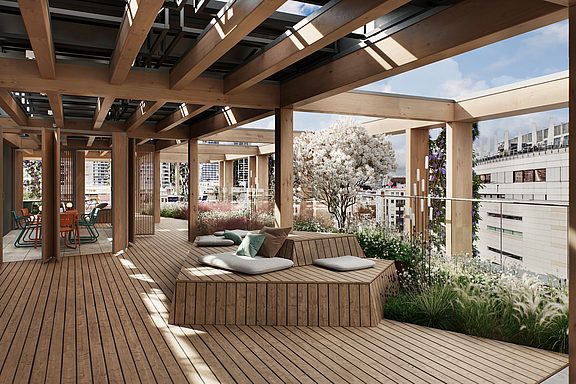
• Roof terrace with technical areas and solar roof
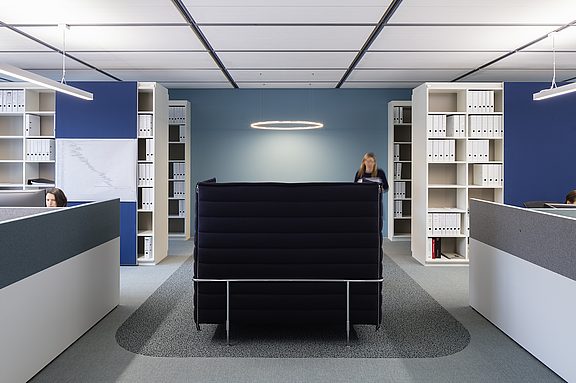
• Open floor plans for modern office concepts
• Clear room heights of over 3.40 meters
Structure
• New atrium from the 2nd floor upwards to provide light for the office spaces
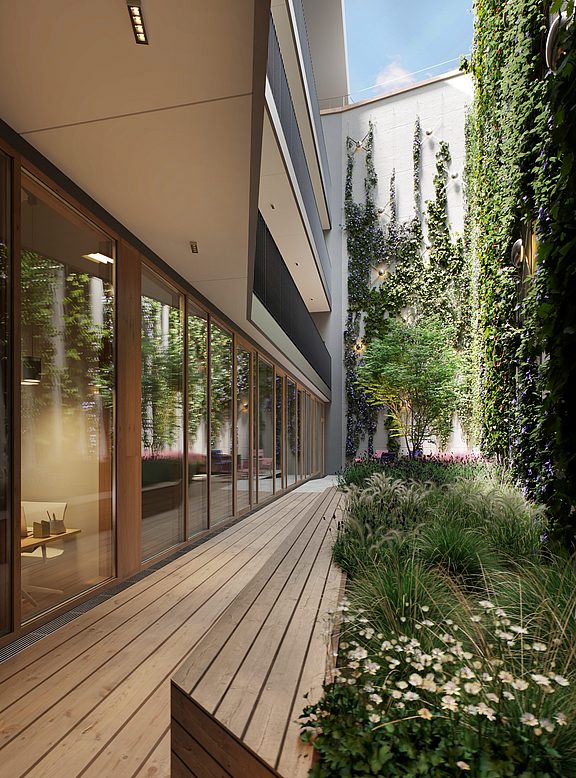
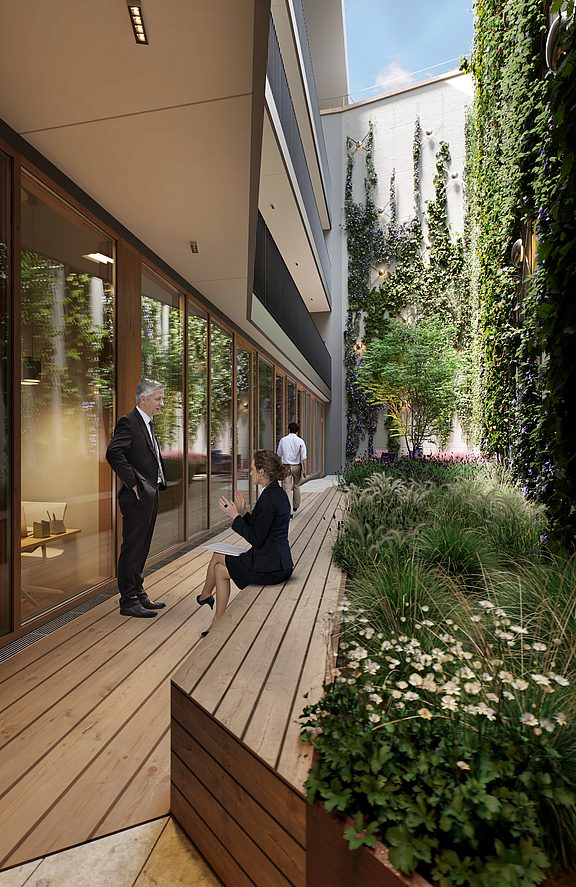
• Loggias with attractive outdoor areas in almost every rental unit
Three possible rental areas per floor ensure maximum flexibility in leasing.
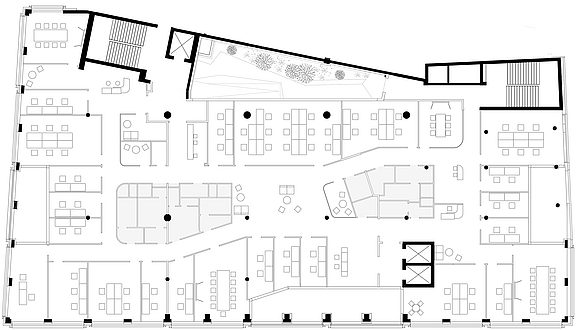
Unlike other colleagues, our competition concept consistently opted for the reuse of the existing building structure. Only the top administrative and technical floor will be demolished and replaced by a new staggered floor in hybrid timber construction with a roof terrace above it, featuring technical areas and a solar roof.
The high retail floors allow for clear room heights of over 3.40 meters in the future loft-like office spaces. This creates open floor plans that can accommodate all modern office concepts. The existing escape routes in the retail areas will continue to be used and will only be supplemented by a new elevator group accessible from Liebfrauenstraße. This very inventory-oriented design, together with the hybrid timber construction of the new building sections, will result in a "nearly zero carbon" building even during construction – one of our client's key objectives.
A necessary structural intervention in the building is a new atrium located on the eastern fire wall between the two stairwells, starting on the 2nd floor, to provide lighting for the office spaces. Along the three street sides, the office spaces are complemented by conservatories or loggias with attractive outdoor areas in almost every rental unit. Three possible rental areas per floor ensure maximum flexibility in leasing.
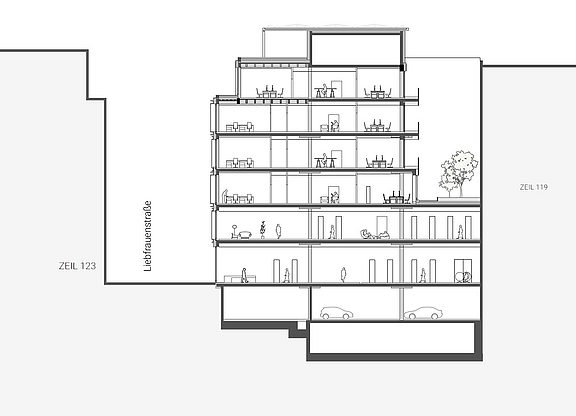

The first floor is designed as a "hybrid floor," meaning that it will be possible to use it for both retail and office purposes in the future in order to be able to respond to further changes in the "retail world."
The first basement level will be converted from existing retail space into an underground car park and a BikeHub for bicycles with adjoining showers and changing rooms.
From the second floor upwards, exceptional office space will be created – loft-like high ceilings, flexibly divisible spaces suitable for state-of-the-art, open-plan working concepts, and green, openable conservatories in almost every rental unit.
In addition, there will be a communal roof terrace above the staggered floor as an outdoor co-working space with impressive views of the Frankfurt skyline. And all this in a prime urban downtown location right in the heart of the city.
The technical equipment will meet all comfort requirements and at the same time set standards in terms of sustainability. The building will be operated exclusively with green electricity as a "green electricity building" and certified to the highest standards.
The "nearly zero carbon" concept will also be visible from the outside of the building—for example, wooden windows will be used, and the facade of the new penthouse floor, including the pergola, will be clad in wood.