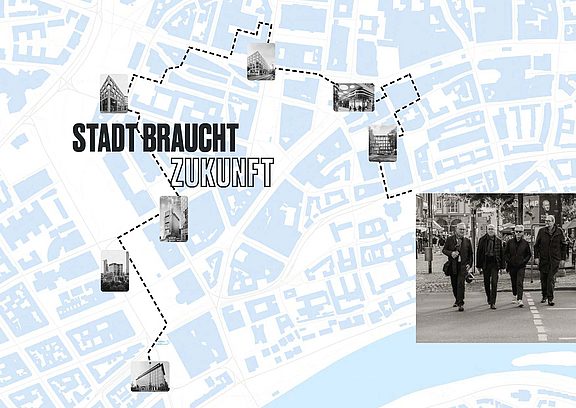
HOW MUCH CITY DOES THE CITY NEED?
"The city seems to me to be a system that is increasingly reaching its limits," Rem Koolhaas recently proclaimed in an interview with brandeins. There is no doubt that our cities are facing a multitude of challenges. Rising land and real estate prices, housing shortages due to scarce land reserves and competition for space. Traffic and infrastructure problems cause environmental conflicts and demands for climate neutrality and digitalization. Vacancy rates and trade tax losses, demographic change and gentrification, and growing demands for urban society to have a say are pushing proven models to their limits. At the same time, proximity to people presents a great opportunity for local authorities, as Benjamin R. Barber so aptly described in "If Mayors Ruled The World." Have cities already recognized this? What future strategies and concrete approaches are they pursuing? How can local authorities and architects develop solutions together? What contribution can architecture make to urban development and the quality of public spaces, and thus to urban society?
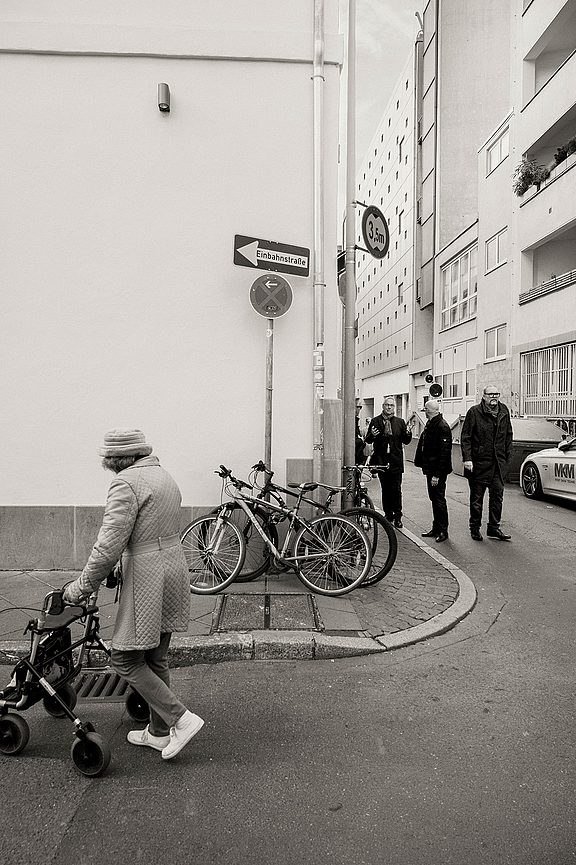
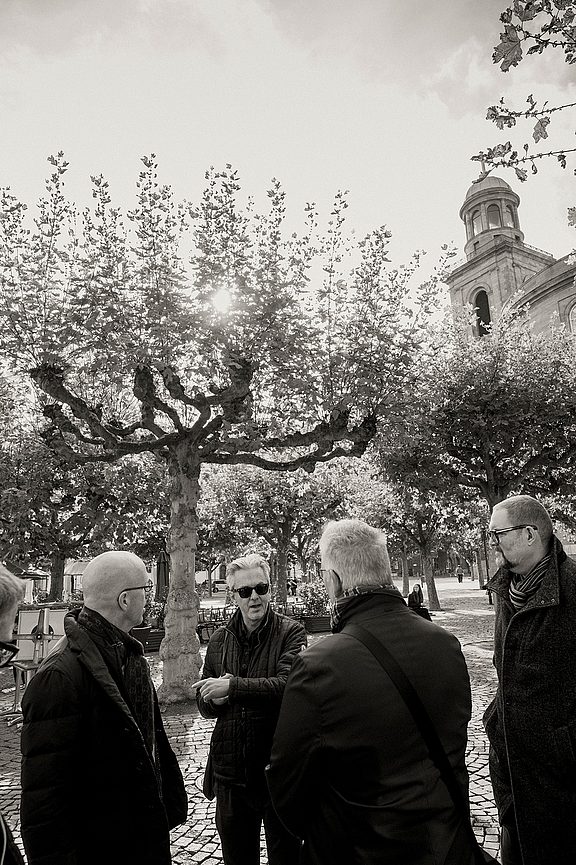
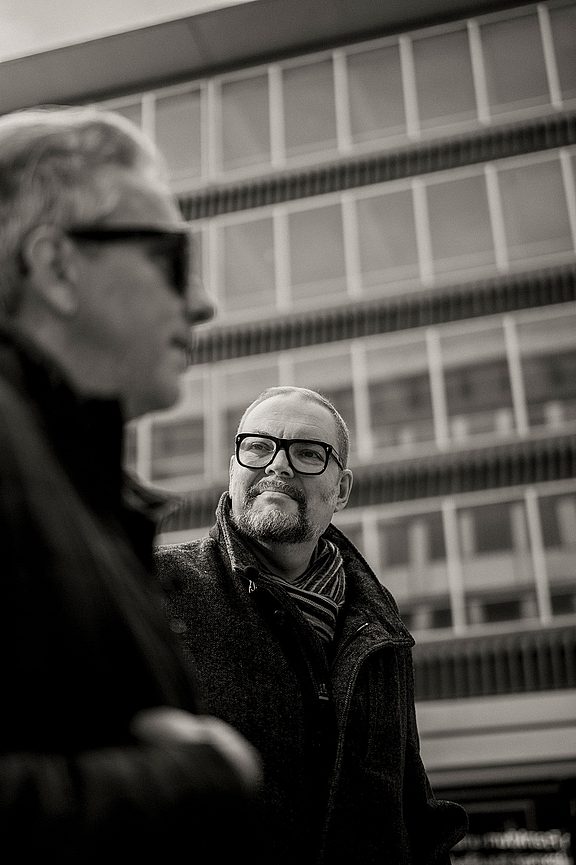
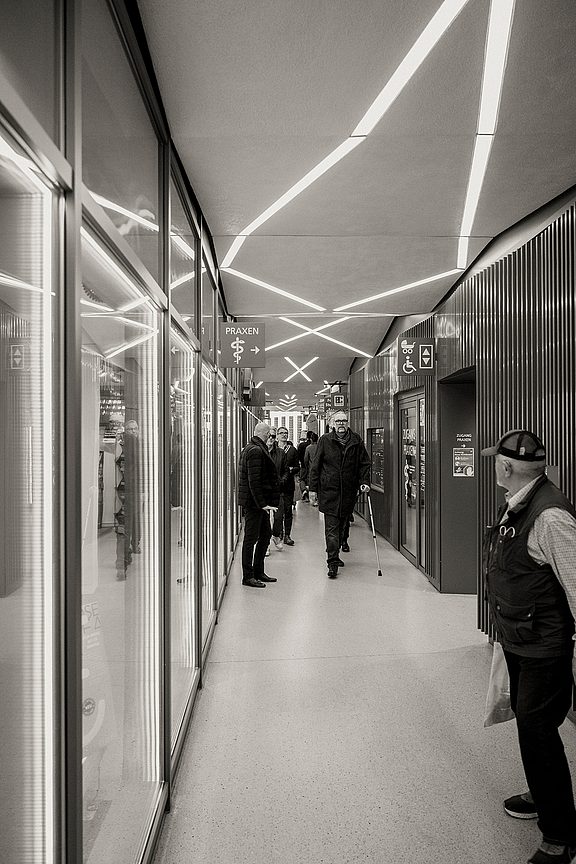
Start Paulskirche – Cradle of Democracy As the birthplace of German democracy, we see the Paulskirche as a symbol for the question of how to shape the cities of tomorrow, which also involves more democracy, participation, and co-determination. The square at St. Paul's Church is a result of early post-war planning in the 1950s: it is located on a wide, four-lane road that divides the entire city center. How can the city of the future develop at such a point?
Martin Hunscher (MH): We can clearly see the urban planning approach of the 1950s and 1960s here. We are talking about the "car-friendly" city. In the past, the Frankfurt Stock Exchange and other important buildings lined the square. Today, it is empty and lacks definition. Our biggest challenge in the coming years will be to develop a new vision for Frankfurt's public spaces without motorized traffic. What could happen on the streets and squares instead? A master plan for the city center did stipulate that more space should be created for bike paths and pedestrians, but we have so far failed to reduce the amount of road space for motorized traffic in order to generate more space for city users.
Gregor Gutscher (GGU): Historically, Frankfurt's thoroughfares ran from the Zeil to the north and south, allowing the city to be crossed quickly. After the war, this concept was abandoned in favor of the more car-friendly east-west crossing.
Mikael Colville-Andersen (MCA): I have never been to Frankfurt. In the newspapers, you read about cities that are making big changes: Paris is eliminating 65,000 parking spaces; Amsterdam 10,000 – these are headlines. This is as much a part of a city's brand as public life. But I have never read anything comparable about Frankfurt – or any German city, for that matter.
Holger Meyer (HM): Paris, London, these cities faced huge problems. Cities react slowly. Only when the pressure becomes too high do they develop concepts. We haven't reached that point yet. We have problems with traffic organization, but somehow it has still worked. The "pressure of suffering" is probably not yet high enough to bring about a fundamental change.
MH: Addressing climate change is the door opener to improving the design of the city's public spaces. We need to push the discussion forward. Until now, the focus has not been on the quality of urban space, but mostly on its functionality. That's why the city is the way it is today.
MCA: No country in the world is as far ahead as Germany in the discussion on climate change, and yet it lags far behind in implementing the opportunities that arise from it.
Vegetables from the Zeil The Zeil in Frankfurt is the largest, most popular, and, in terms of rents, most expensive shopping street in Germany. But brick-and-mortar retail is stagnating. Large department stores and shops are closing. Are there any ideas on how to turn the donuts back into doughnuts?
HM: This is happening in every city. The main shopping streets are a development problem or an opportunity; it's ambivalent. Brick-and-mortar retail is dying. So what happens to these vacant properties? This is where the next challenge for the coming years lies—developing a vision for such shopping streets.
MH: Frankfurt is the heart of the Rhine-Main region. Frankfurt's city center must therefore remain the most central, vibrant place in the region in terms of functionality. It can't just be about housing; we have to think about new uses to bring people from the region into the city center. For example, we are discussing locating the opera house or other cultural institutions on the north side of the Zeil instead of large-scale department store structures.
MCA: Here on the Zeil, I would invest money in urban agriculture. The building there has four floors, so you could set up an impressive facility to grow fruit and vegetables for the whole city. In Copenhagen, an indoor facility like this supplies almost the entire city with vegetables.
GGU: AWESOME! Vegetables for the Kleinmarkthalle from the Urban Garden Outlet Store.
MCA: We need to free ourselves from traditional patterns of thinking and decision-making. Milan is a good example. The city lets citizens take action in their own neighborhoods and promotes ideas in an unbureaucratic way. You could give a building to citizens for five years so they can develop and implement ideas that we may never have heard of before.
MH: Current German planning law stands in the way of this. We have been discussing the necessary changes for a long time. For example, the switch from retail and commercial to residential. But since commercial space means higher land values than residential space, the discussion ends there due to regulations on so-called planning damage.
MCA: But if someone comes along and does something crazy that attracts people, that's also good for the owner. Good ideas create life and dynamism, and suddenly everyone says, "Wow, what a cool idea." That's why politicians should convince owners to make such properties available for this purpose.
Off Space: Hauptwache
HM: Hauptwache is one of Frankfurt's oldest and most important squares. With the construction of the main S-Bahn line under the Zeil in the 1970s, it became one of the largest public transport hubs in the city. For 20 years, there have been plans to improve the square. It has been closed to traffic for some time now, but this has not made it any more attractive.
MH: In 1999, a design competition was held for the entire Zeil area, including Hauptwache and Konstablerwache. The idea was to restore Hauptwache as a historical ensemble and to close off the lower-lying area again. Since then, the city has been discussing what should happen here. Every five years, we are given the task of developing new ideas. We are now planning to convert the sunken area into a kind of arena and to enter into dialogue with residents and users. It could be a nucleus for many activities here at the Hauptwache.
MCA: Let the citizens develop their own ideas, as a kind of temporary urbanism. Divide the square into four equal squares and then let different users of the city, children, older people, skateboarders, migrants, each use one quarter. In the end, you take the best ideas and redesign the square on that basis. No city in the world has ever done a project like this.
Behind the facade There are many public parking garages in downtown Frankfurt. The Börsenparkhaus is one of them. It is located in the courtyard of the Frankfurter Volksbank opposite Börsenplatz. holger meyer architektur has developed a development here that enlivens the rear area between the new building and the parking garage with bars and cafes.
HM: Originally, we wanted to demolish the parking garage, build an underground garage instead, and put a narrow high-rise on top of it to create a more open space. But no one wanted to go down that route. Even the idea of converting the front row of parking spaces on the two lowest levels of the parking garage to the square side and revitalizing this side of the square with shops or restaurants was rejected by the parking garage operator because the parking spaces generate more rent. I would have liked to see a guideline from the city on this.
MH: It will be interesting to see what happens to the parking garages in the city center in the coming years. If we change mobility in the city, their time will be over. This is a new opportunity for urban development, but it will also be a heated debate.
HM: A change of heart is taking place here. For five years, we have been observing that developers and builders are thinking about the reuse of parking garages that we are currently planning and building. At the moment, many larger projects are discussing whether an underground parking garage, which is much more expensive with an investment of 40,000 to 45,000 euros per parking space, can be replaced by an above-ground parking garage. We are already looking for flexible ways to reuse parking garages, for example as office buildings, shopping centers, or whatever else. Underground parking garages are much more complicated to repurpose: What do you do with these underground spaces when people no longer park in cities?
MCA: Social change lies in demotorization.
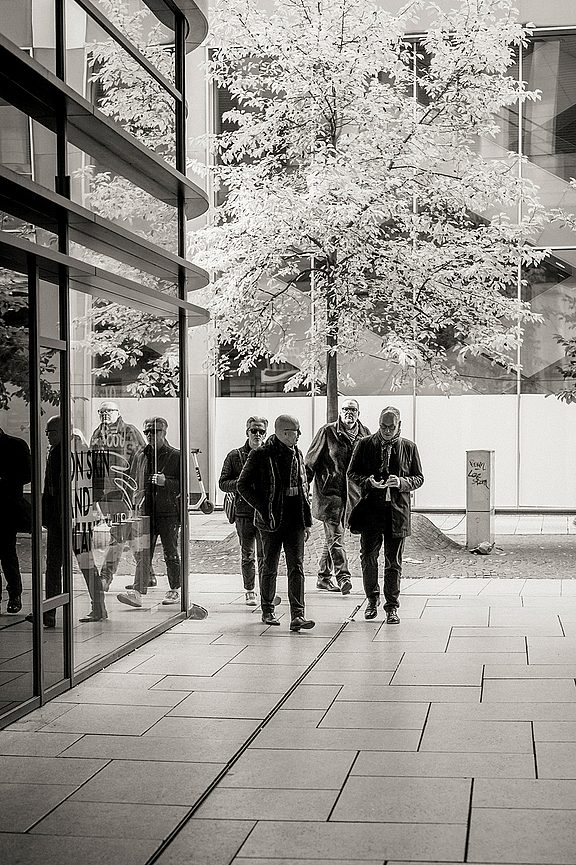
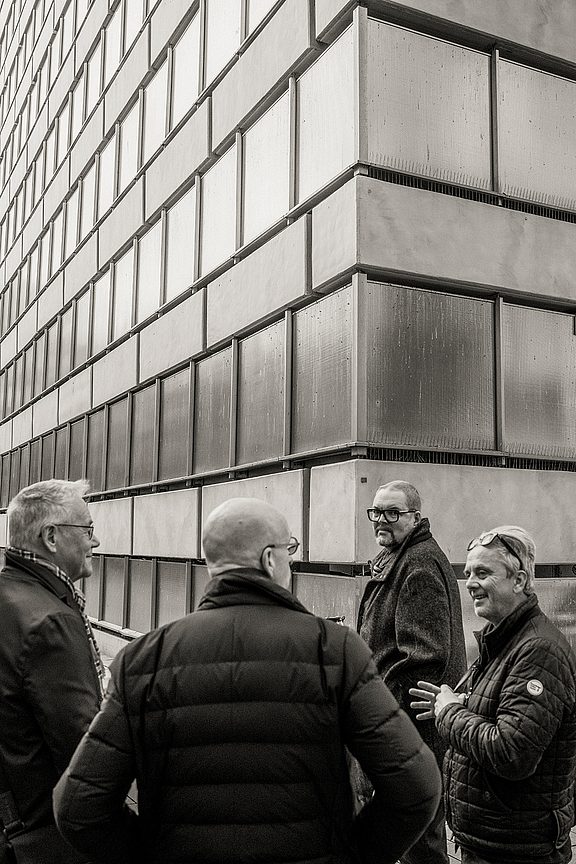
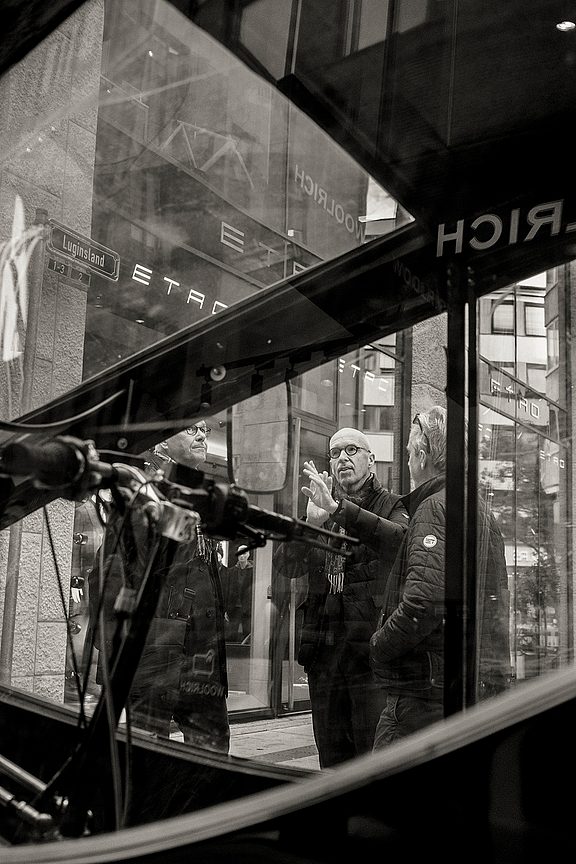
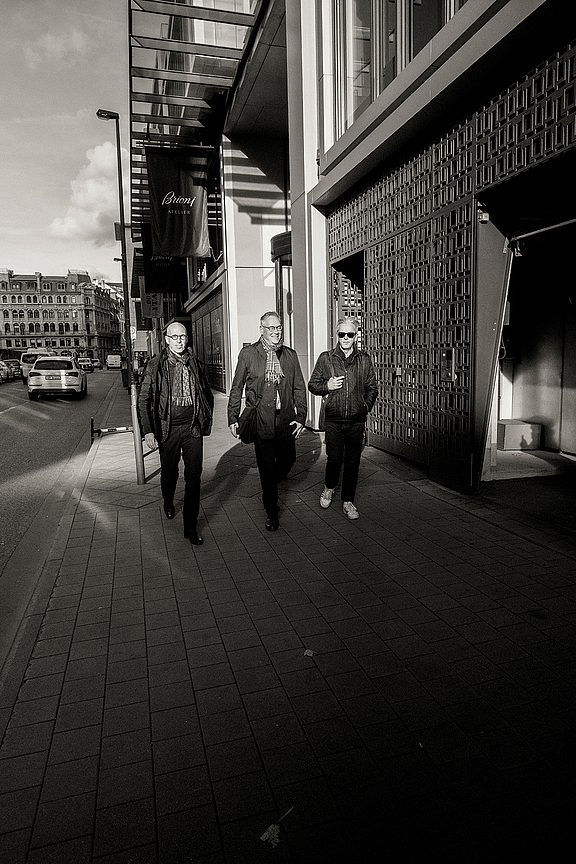
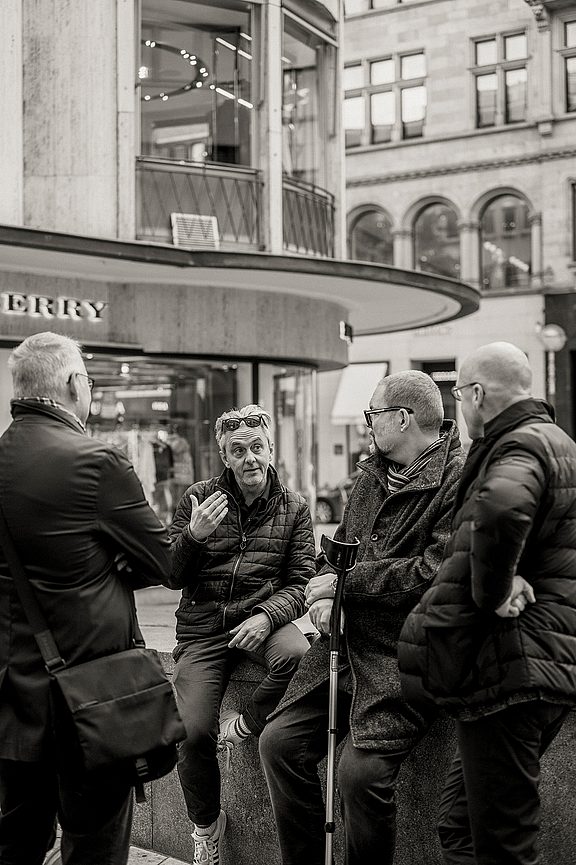
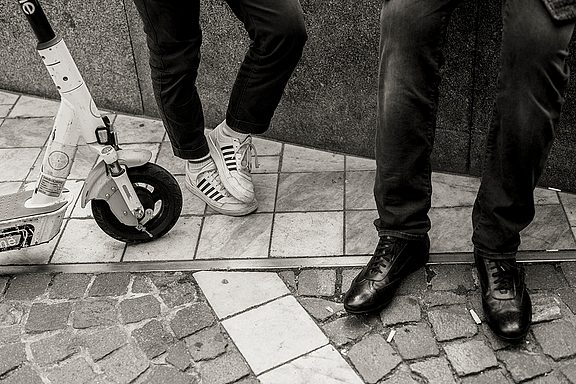
The city for bikes!
HM: What is your impression of Frankfurt as a bicycle-friendly city, Mr. Colville?
MCA: Well, we once compiled a global list of bicycle-friendly cities and examined and evaluated 130 cities. Three of the 20 best cities were in Germany: Berlin, Hamburg, and Munich. Frankfurt was somewhere around 60th place. At that time, there was no developed network of bike paths. Germany has the widest streets in Europe, so it has the necessary space—and that is public space. I know many cities that fundamentally lack space for bicycles. For over 70 years, traffic has ruled supreme – we need to reclaim this space. In the 1920s, the sidewalks in New York were the widest in the world. Then cars came along and the sidewalks disappeared or became smaller. The only thing we need to do is re-democratize the streets. For example, with dedicated bicycle lanes such as the "Fietstraat." The concept originated in the Netherlands. Motorists must yield, are not allowed to pass, and are not allowed to honk their horns. Cyclists set the pace. However, here in Frankfurt, even along a busy road, I have only seen the red bicycle lane, without the necessary safety barriers to separate it from motor vehicle traffic.
MH: Frankfurt recently started marking bike lanes on the roads in red and separating them structurally. That works well. It's a highly visible element and signal for drivers. Like here on Goethestraße,
which gives priority to cyclists.
HM: Why haven't cars been banned from the street altogether here?
MH: Perhaps because of the exclusive shops?
MCA: Cyclists spend more money than motorists. A study shows that sales along well-developed bike routes increase by 30 to 50 percent. Cyclists usually ride the routes daily and buy smaller quantities. Motorists go shopping once a week. So cyclists spend more over the course of the week. A bike lane was created on Sixth Avenue in New York and the street was narrowed from two lanes to one. Initially, retailers feared they would lose customers. In fact, they saw a 48 percent increase in sales.
MH: But the store has to be easy to reach. In Frankfurt, we are currently discussing the creation of central bicycle parking spaces. However, this contradicts the logic of always being able to ride your bike directly to the store.
Tackling climate change Frankfurt has a new city government. In times of climate change, there must be a joint effort by politicians, administrators, and citizens to change this. The new coalition agreement for Frankfurt reads more like a declaration of intent than a catalog of measures.
MH: Yes, there were and still are very good ideas and plans that we developed at the administrative level in our day-to-day business, but these have not yet been implemented. There are many things that we find in the coalition paper. I am very curious to see how politics in Frankfurt will develop over the next five years.
MCA: Frankfurt reminds me of Rotterdam. It was also destroyed during the war and rebuilt based on the American model.
MH: There are many parallels between the two cities. We are engaged in an exchange with politicians and planners there. It's exciting because the approaches are very different culturally. Our way of discussing and finding solutions takes longer. We should learn from our neighbors – nationally and internationally. We often look to Hamburg when it comes to urban development and housing construction. But the big challenge in the future will be the redevelopment of the city and its neighborhoods.
MCA: Compared to other German cities, Frankfurt is not very green. But it needs to be in order to counteract heat islands, especially with tall buildings. Take the Bosco Verticale in Milan, where the entire building is covered in greenery. Aside from the hype, it is also a solution for biodiversity and cooling the city. Plus, it looks good. There needs to be more greenery in the city, on facades, on balconies, in squares. Are you familiar with the climate district in Copenhagen?
MH: The sponge parks? Yes, we also have massive problems with heavy rain and flooding in Frankfurt and were able to exchange ideas with colleagues on site in Copenhagen.
MCA: The idea of the sponge city is a response to increasing flooding and torrential rainfall. Sponge parks such as Tåsinge Plads in Copenhagen are huge rainwater retention basins that fill up during heavy rainfall, preventing neighborhoods from flooding. The parks also create a good urban climate and are popular meeting places in summer.
MH: Solutions to traffic issues and the effects of climate change are not the only factors that will determine the future of city centers. There is also enormous potential in construction and, above all, in the renovation of existing buildings. The focus here is on the efficiency of buildings.
HM: We invest 10 to 15 percent of the capital used in new buildings to save one or two percent of energy. The ratio of costs to impact is approaching zero. And we have reached a point where we can't do any more. We talk a lot about climate change. But if we don't change our behavior in terms of car use and flying, nothing fundamental will change.
MCA: I believe that cities are more successful in the fight against climate change than national politics. The potential for change lies in cities. They have the power to reduce car traffic from 50 to 25 percent, double the share of bicycle traffic, and expand public transportation. That's where the battle will be won. The construction and operation of buildings causes a lot of CO2, and road traffic is also constantly increasing. These are the levers we need to pull.
Traffic in Frankfurt Between 400,000 and 500,000 people commute to Frankfurt from the surrounding area every day. What percentage of them travel by car, public transport, or bicycle?
MH: The figures are fairly stable at 22% for public transport and around 20% each for cycling and walking. Since the coronavirus pandemic, the proportion of public transport has shifted in favor of cycling.
HM: We have just presented a major project in Eschborn, a car-free building complex covering around 60,000 square meters. There is a mobility center where you can charge your e-bikes, change your clothes, and take a shower. I expected a heated discussion, but then the mayor just asked, "How did you plan the bike connection to Frankfurt?" But we can't solve the traffic issues. We can solve the problems within our project, but not the connection between centers. These overarching concepts need to be pushed forward urgently.
MH: Regionally, we are currently planning a 35-kilometer-long bicycle expressway from Darmstadt to Frankfurt. Eight additional regional routes are in preparation. We are considering separate bicycle lanes, but the question is where to route cyclists into the city.
MCA: In the greater Copenhagen area, 400,000 people cycle today, but only 0.2% cycle 30 kilometers or more. We measure bicycle traffic in Copenhagen throughout the year. From outside the city, 46% of people come by bicycle, 30% by public transport, and the rest by car. But if you live and work directly in Copenhagen, 62% come by bicycle and only 12% by car. Only around 30% of people in the city own a car. All cars come from outside the city. It's easy to ride a bike in the city; it's the fastest way to get from A to B. Not because it's environmentally friendly, but because it's fast, safe, and convenient. To achieve this, the city must promote cycling—then people will ride bikes.
The city of the future So what are the prospects for Frankfurt? What can and must we learn from other cities? And how long will it take? Is 2050 the magic number? How can we get citizens to formulate their wishes for the city? Do we have to offer something and then see how it works? Or should we encourage residents to get more involved in the debate and assert their interests?
MH: I think you have to think in both directions. First, you have to decide how you want to use public space and how you want to organize public transportation in the city. Then you can discuss with the public what that looks like in detail and how it works. However, I fear that we will end up in a never-ending discussion if everyone is involved in everything. That won't work if we want to achieve a rapid turnaround. We need to make quick decisions and rethink our approach. This is a major national task, not just a regional one. We need to find new solutions for all these issues, climate change, changes to public transport – and not just for Frankfurt.
MCA: I'm going to throw in two words that are very hip in English urbanism right now: enabling and curating. I am convinced that Martin and all the other Martins of this world know exactly what needs to be done. They are just caught in the dilemma that politics dictates the slow pace of change. So we not only have to enable planning teams and cities around the world, but also urge politicians to give them more freedom. We have to reactivate citizens and, for the first time in 70 years of traffic-oriented planning, ask them: What do you want? They know intuitively. So we have to empower them and give them the appropriate power. Today's Copenhagen is largely the result of a pilot project, a pilot project culture. We simply try something out for six months and see if it works. Not many cities can do that, but we have tested things over the years and now we know what works. So we empower the planners and the citizens. Curating is the latest cool term in urban society. Give the city's citizens the opportunity to design public spaces, their environment, themselves, as in an exhibition or an art gallery. We have to involve citizens; they have better ideas than 500 of my colleagues in urban planning. In Germany, there is a solid democratic culture and a discursive society for this. Children and citizens are the future of urban planning: we should and must listen to their wishes.
HM: And that makes me feel positive. Everything can happen much faster. Because politicians are driven by citizens and climate change and have to respond. People are no longer buying cars and are cycling or using public transport; they want more sustainability. The next generation will automatically demand different priorities in urban planning. That's why I'm sure that in ten years' time, we'll be discussing this on a completely different level. We all have ideas, and with small solutions, we can achieve better and more creative solutions and planning results step by step. I am sure that by 2030, cities in Germany will look very different from today.
We will ask how things have developed in StockWerk vol. 10. Thank you very much for these insights.