COMPLETE ***
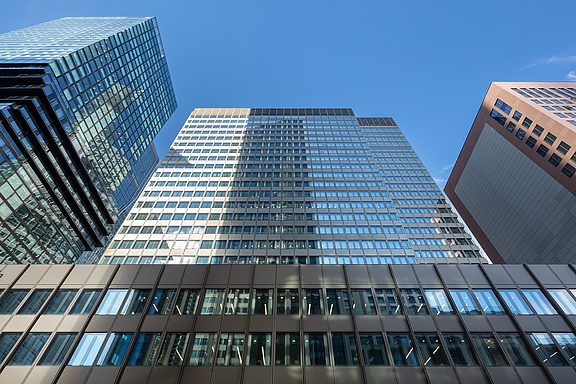
When a property has reached the end of its life cycle, the options of demolition and new construction must be weighed against redevelopment. Our teams develop complete relaunch scenarios for such situations. Depending on the requirements and specifications, we develop a completely new building that is both contemporary in design and technically up to date, based on a demolition down to the supporting structure, which is once again marketable in all respects without demolishing the entire building.
| LOCATION | Neue Mainzer Str. 34, Frankfurt am Main |
| TYPE | Revitalization of an office tower |
| CLIENT | DIC Asset AG/Global Tower Projekt GmbH & Co. KG |
| FLOOR SPACE | 40,250 sqm GFA oi, 6,600 sqm GFA ui |
| YEAR OF CONSTRUCTION | 1972, Architect: Richard Heil |
| PLANNING AND CONSTRUCTION PERIOD | 2016-2021 |
| SERVICE PHASES | LPH 2-4, partially 5 and 8 |
| CERTIFICATION | DGNB Platinum certificate, WiredScore Platinum certification |
| SPECIAL REQUIREMENTS | Facade renovation in accordance with monument protection regulations |
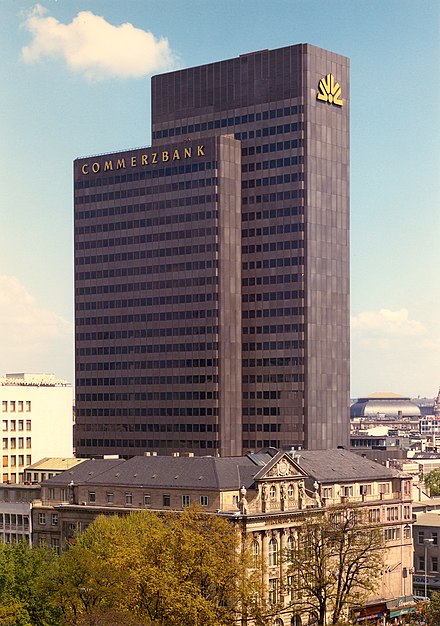
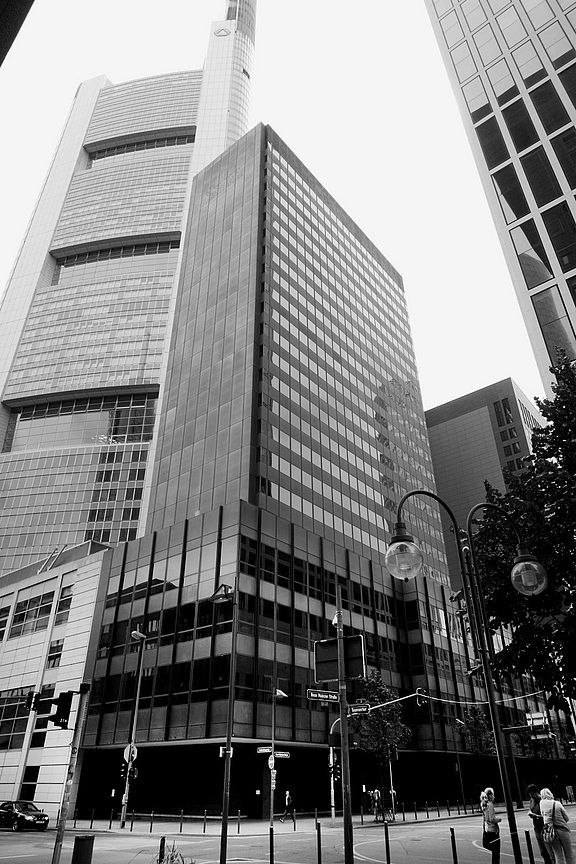
Built in 1973 as the Commerzbank headquarters by architect Richard Heil based on his competition design in the international style, this timelessly beautiful building in Frankfurt's banking district was 110 meters high, making it the tallest building in Frankfurt at the time. Fifty years later, prior to its revitalization, it was merely a rented back office of the European Central Bank (ECB) with a barely visible entrance, storage areas on the ground floor, and virtually sealed off from public space due to the tenant's security requirements.

Located at one of the busiest intersections in the city center, this building had become invisible in a peculiar way. After the ECB moved out and Commerzbank sold it to the project developer GEG, the question was how this building could be brought onto the "
normal" rental market for the first time in almost 50 years. We had already conducted an in-depth analysis of the building for the previous owner, Commerzbank, so GEG, as the new owner, decided to take advantage of our extensive expertise and prior knowledge and commissioned us to plan the revitalization.
As was common during this period of construction, the floor slabs had to be upgraded to F90 quality, as was the case with many of our revitalization projects built between 1950 and 1975. The fire department elevator also no longer complied with current regulations.
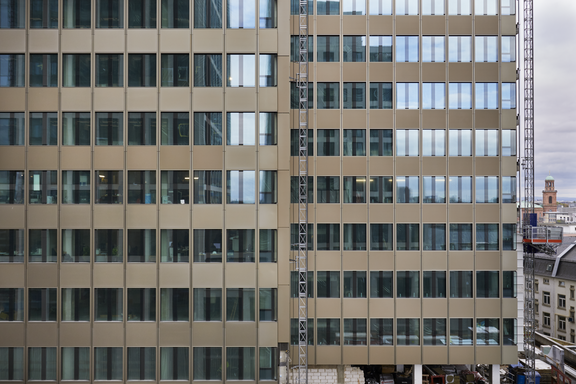
Although the floor heights were not excessive, the biggest challenge was the massive edge beam along the windows in combination with the high closed parapet of the elemented curtain wall. We knew that maximizing the lighting areas on the facade was the key to achieving a contemporary quality of office space that would have to compete with the highest-quality new buildings in the immediate vicinity in the future.
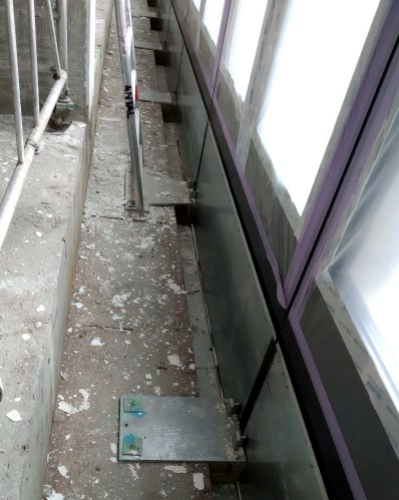
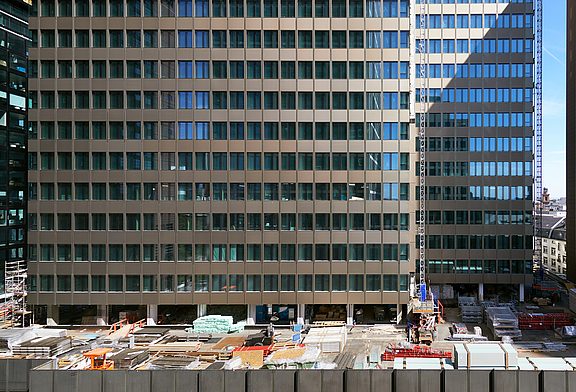
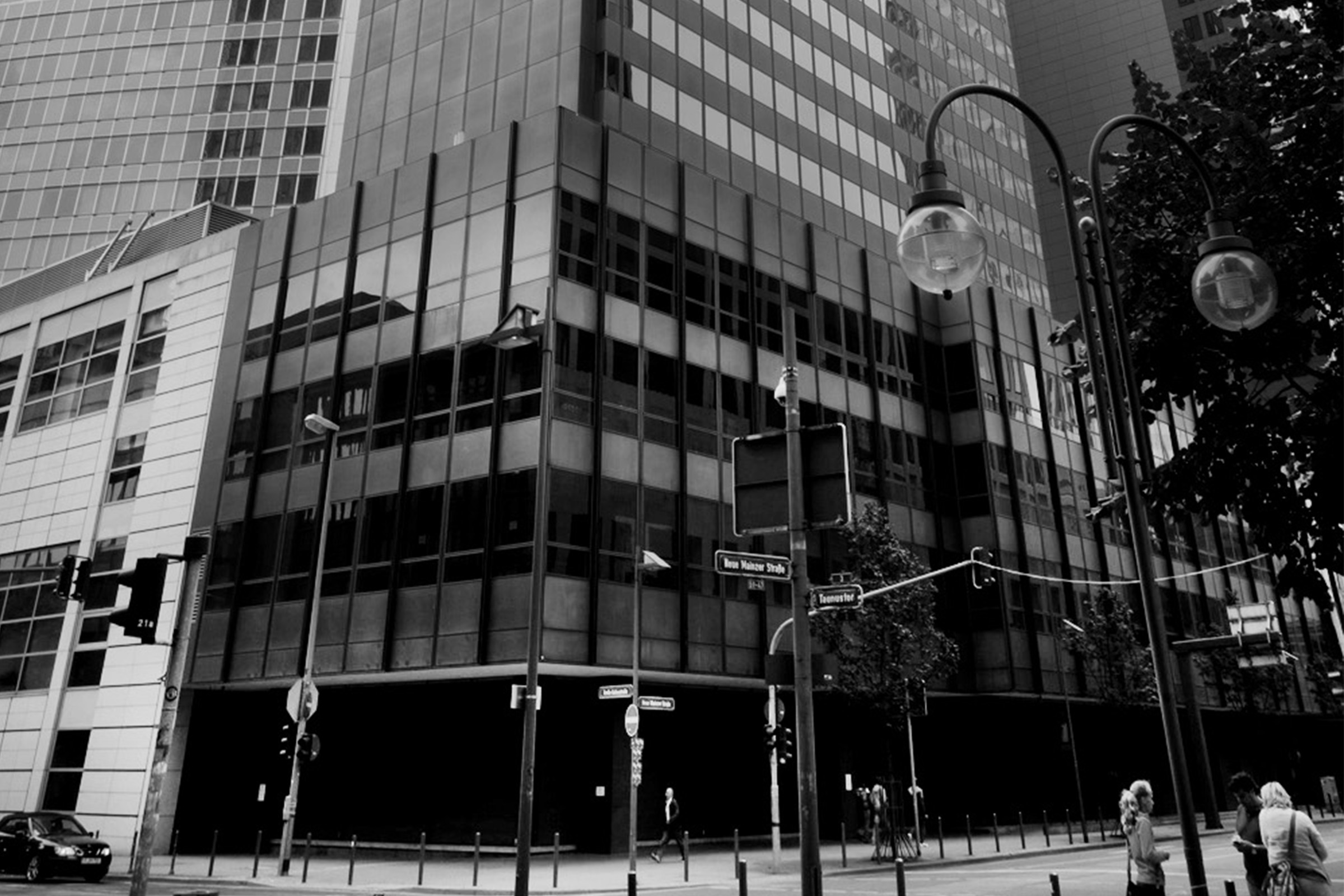
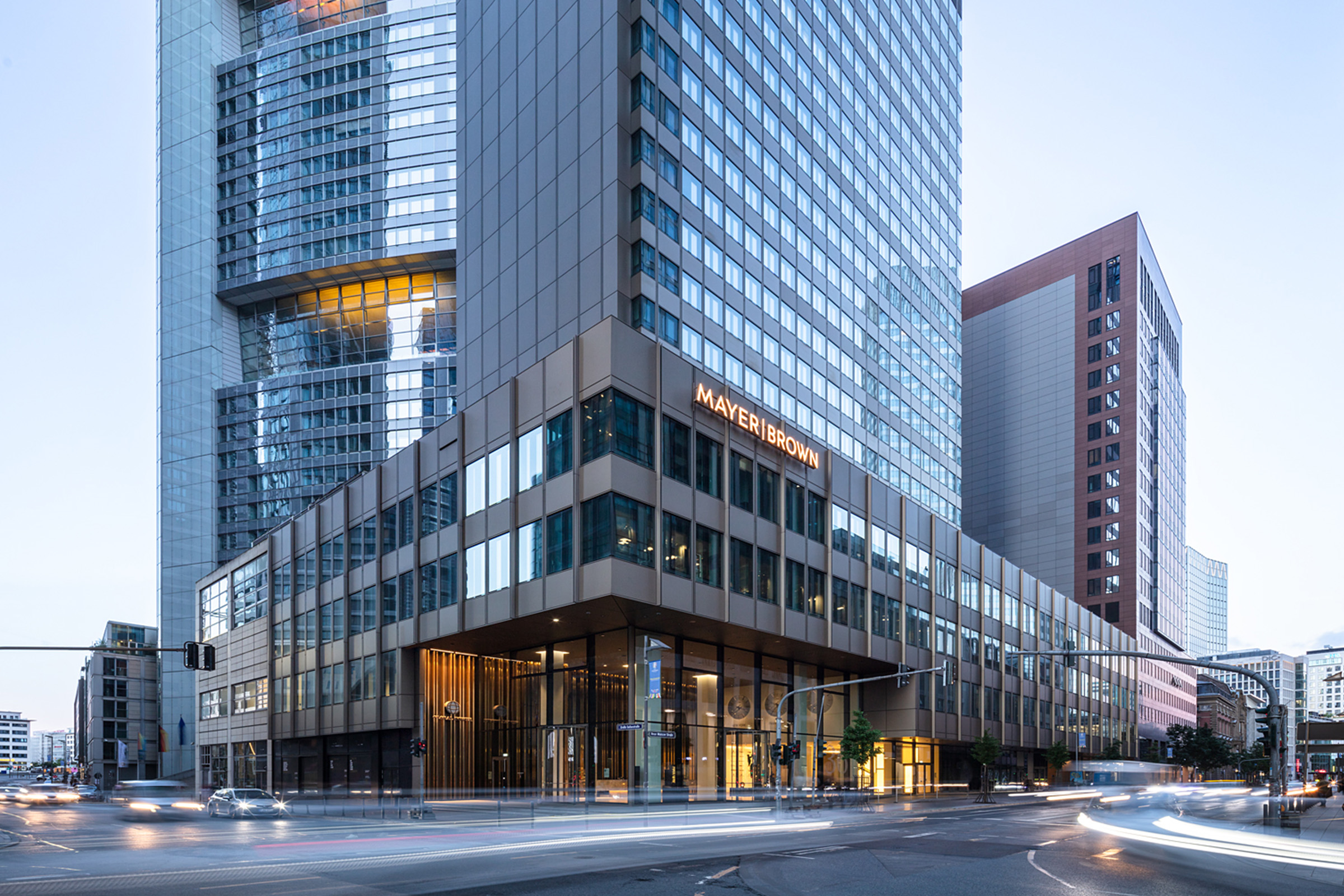
Materiality, proportions, and color scheme of the existing façade
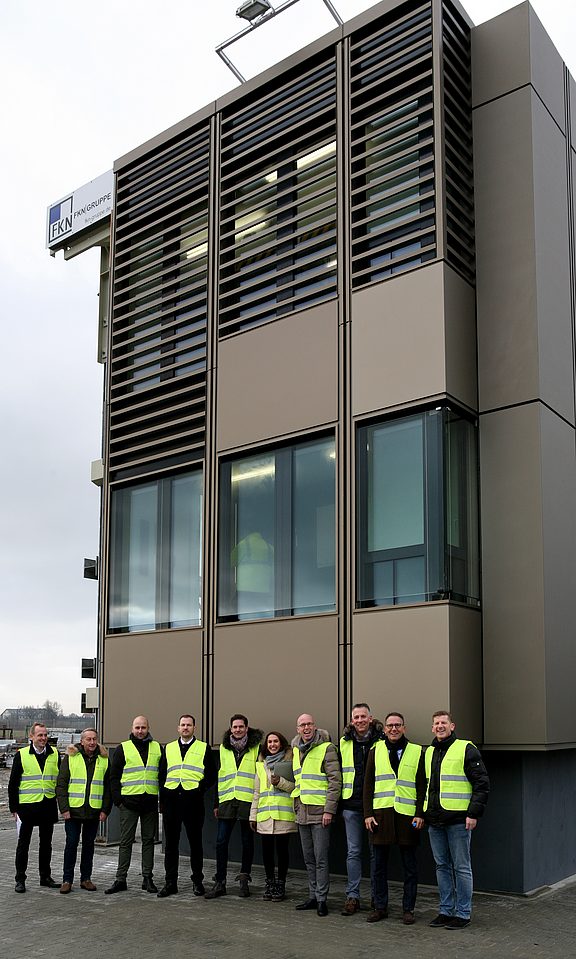
Double-shell facade
Front level of the façade:
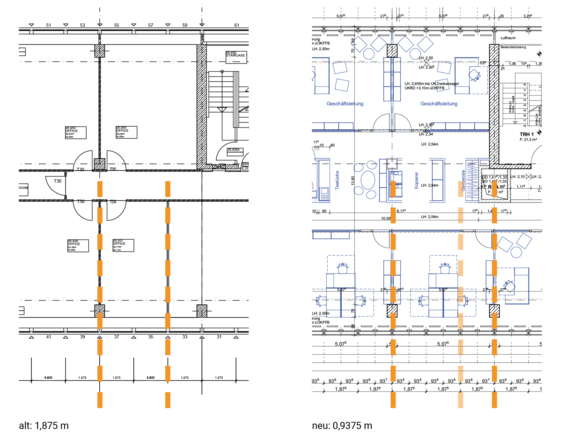
• Vertical pilaster strips in the style of the existing facade (grid 1.875 m)
• Frameless glazing between pilaster strips
Second facade level:
• Openable window sashes
• External sun protection
• All necessary wall connections
• New expansion grid = 0.9375 m
The ratio of parapet to facade was ultimately changed to create the impression of floor-to-ceiling glazing in the office spaces.
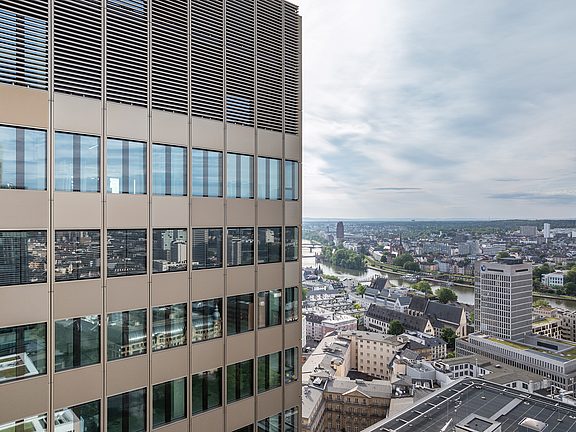
Another challenge in the discussions with the historic preservation authorities was the use of the upper floors of the high-rise building.
From the outside, the top of the building is characterized by the multi-story slatted facade of the former technical areas. It was clear early on that a modern building services concept would no longer require technical areas on the same scale as before.
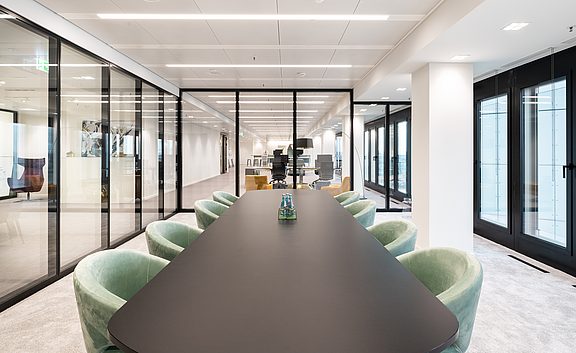
Here, too, several rounds of talks resulted in an agreement that the high-quality space on the 27th floor could now be used as office and conference space, barely noticeable from the outside thanks to the finely tuned proportions of the slats.
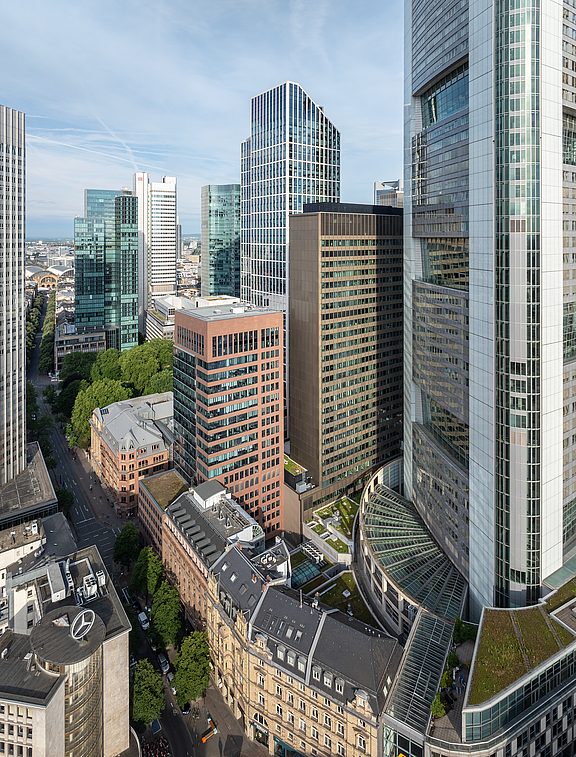
Another point that was discussed intensively was the opening of the foyer on the ground floor of the base building. Over the past decades, the intersection with the Japan Center, Taunusturm, and Omniturm had undergone significant urban development changes—it is the only intersection with four high-rise buildings in Frankfurt.
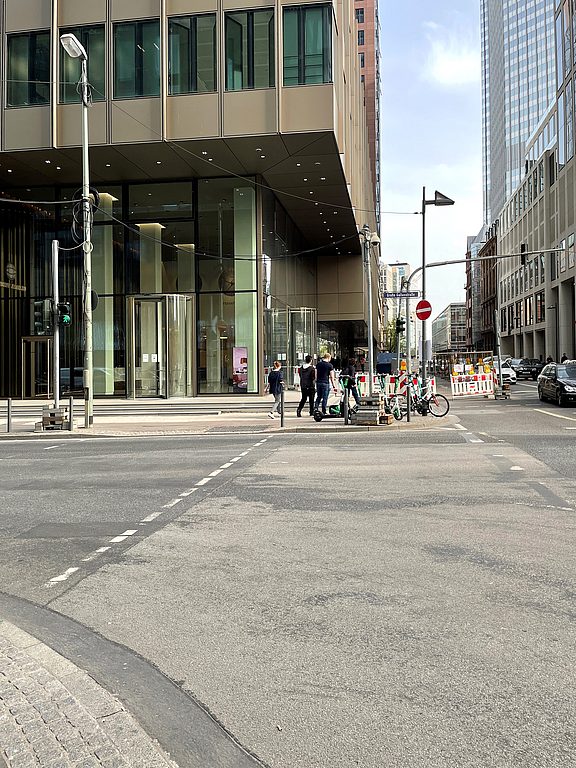
In order to re-establish the building as part of the lively public space and open it up to the Four Frankfurt project, a two-story open foyer was to be cut into the base building at the corner of Neue Mainzer Straße and Große Gallusstraße. After discussing various options, the monument protection authority also approved this structural change.
The success of the project is the result of close cooperation between monument preservationists, architects, and owners. Monument preservationists want to preserve these buildings, and we as architects want to create a successful product for and with our clients.
And the approach of preserving a suitable building in line with the original idea is—as you can see—a successful product: we are able to transition such buildings into a second, very sustainable cycle of use lasting another 50 years.