BASIC *
The structure, facades, and structural properties are sound and can continue to be used. The basic layout and access points are also in the right place. We are primarily focusing on the new layout, the design enhancement of the spaces, access and development, and the modernization of the technical equipment and fire protection.
| LOCATION | Eschersheimer Landstraße 50-54, Frankfurt am Main |
| TYPE | Redesign of entrance and common areas, conversion and expansion of office space |
| CLIENT | ELS Grundbesitz GmbH |
| AREA | 1,775 sqm oi |
| CATEGORY | Office and interior |
| YEAR OF CONSTRUCTION | 2002, architect: Jo.Franzke |
| IMPLEMENTATION PERIOD | 2018–2019 |
| SERVICE PHASES | 1–8 |
The Eschersheimer Landstraße 50-54 project is perhaps one of the best examples of the use of valuable existing structural resources, targeted and well-considered "minimally invasive" interventions and measures after 20 years of use, and the high added value achieved through these measures.
The building was completed in 2002 as a single-tenant property for the Handelsblatt newspaper as a "tailor-made suit" with a long-term lease. Over the last 20 years, not only have the demands on our office environments changed significantly and rapidly, but so too has the media world. Handelsblatt's space requirements have been significantly reduced, and parts of the space had already been sublet or re-let by the owner. After a law firm moved out, around 50 percent of the space was vacant, restructuring of the building was necessary, and it was put up for sale.
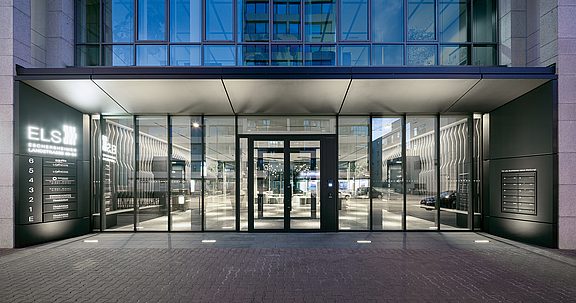

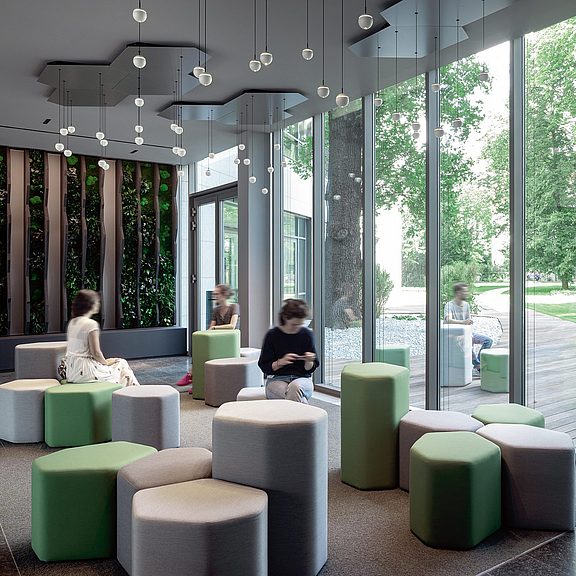
The architecturally sophisticated building was designed by Frankfurt-based architectural firm Jo.Franzke in accordance with the tenant's requirements and features high-quality fittings.
The structure of the building was sound, with consistent ceiling heights of 3 meters, cooling ceilings, and raised floors—a prime example of sustainable construction in the best sense of the word, which can be adapted to current requirements.The existing natural stone façade, which is also of high quality, is timeless – despite its energy deficits by today's standards, replacing this façade after only 20 years would have been inappropriate from the point of view of conserving valuable building resources.
But... after 20 years, the building was not only "worn out," it was simply no longer attractive for further "high-quality" rental in the demanding Frankfurt market.
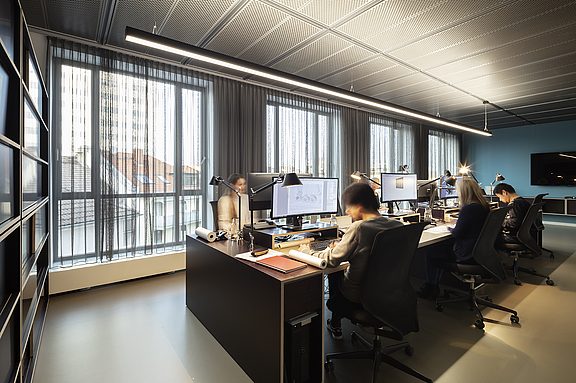
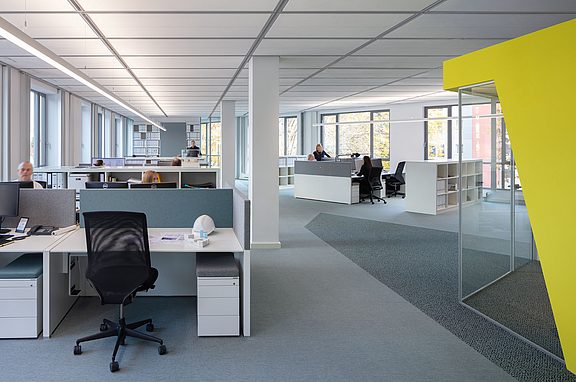
The office spaces were unusually shaped, but well connected. They were both divisible and variable, suitable for open-plan office concepts as well as for classic small-scale room structures. Here, almost everything could be realized in a space-efficient manner according to user requirements. However, the common areas had the austere, functional charm of the late 1990s. Although of high quality, the foyer, elevator lobbies, elevator cabins, and restroom facilities could no longer credibly compete with the new buildings in downtown Frankfurt as part of a marketing strategy for a new, modern office world. In addition, the access areas in particular showed qualitative deficits.
The goal we defined together with the client was to create a new image for the building with as little effort as possible and using the existing high-quality resources, making it comparable in quality to competing new buildings on the rental market. The task was therefore deliberately not to compare ourselves with other existing buildings as competitors, but to look "upwards": What distinguishes this building in terms of quality from comparable new buildings on the market? Which benchmarks can we achieve and which cannot, or only with disproportionate effort? This is a fundamentally different approach to that taken when planning a new construction project.
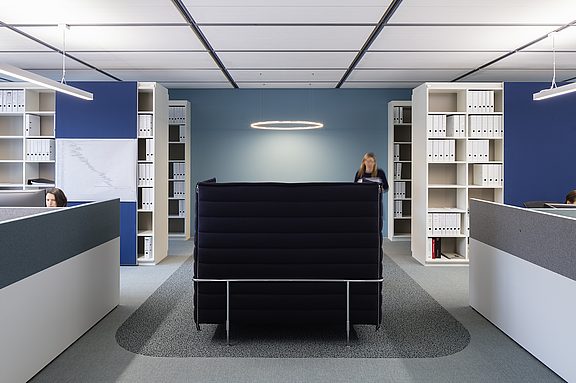
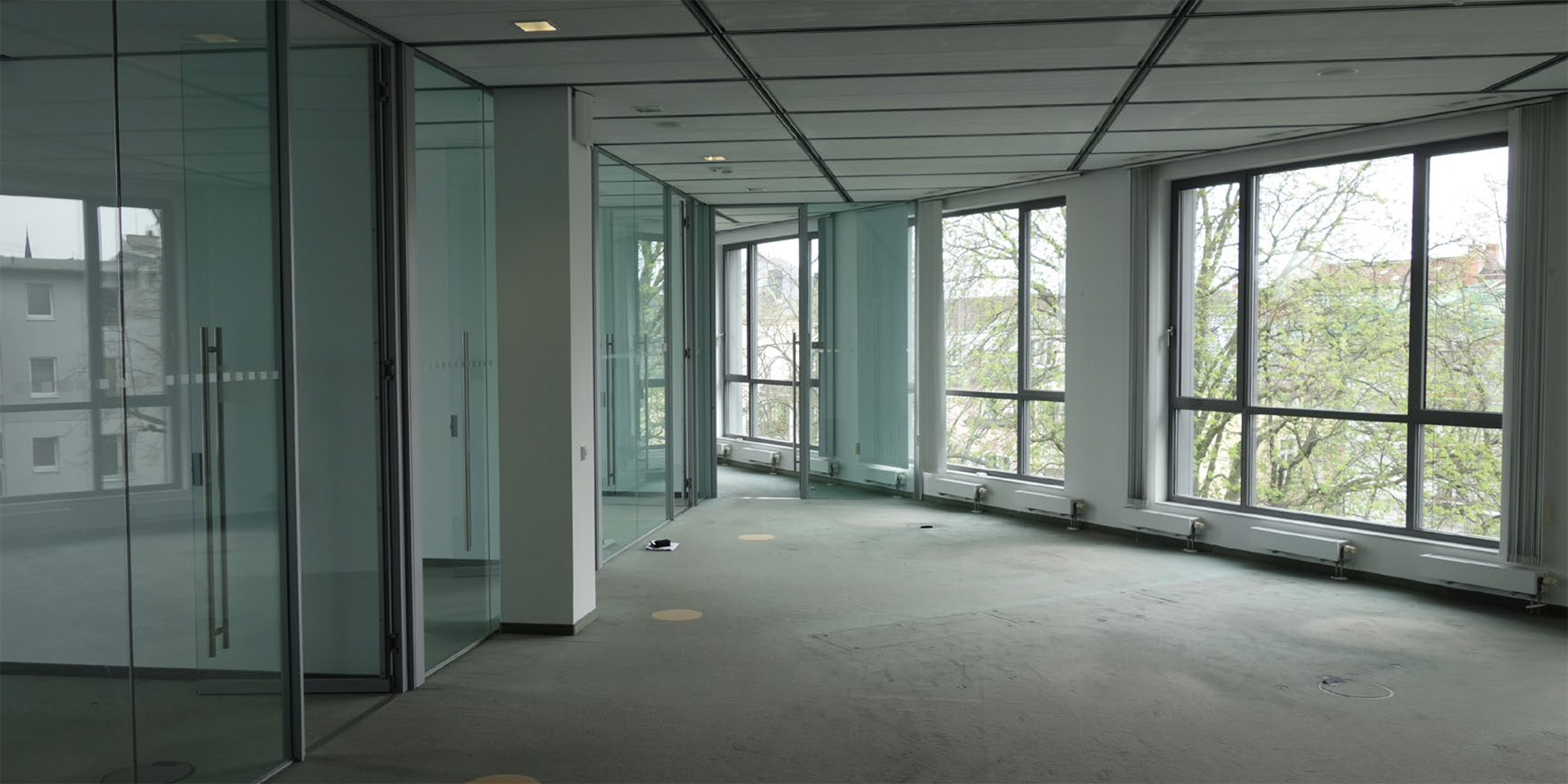
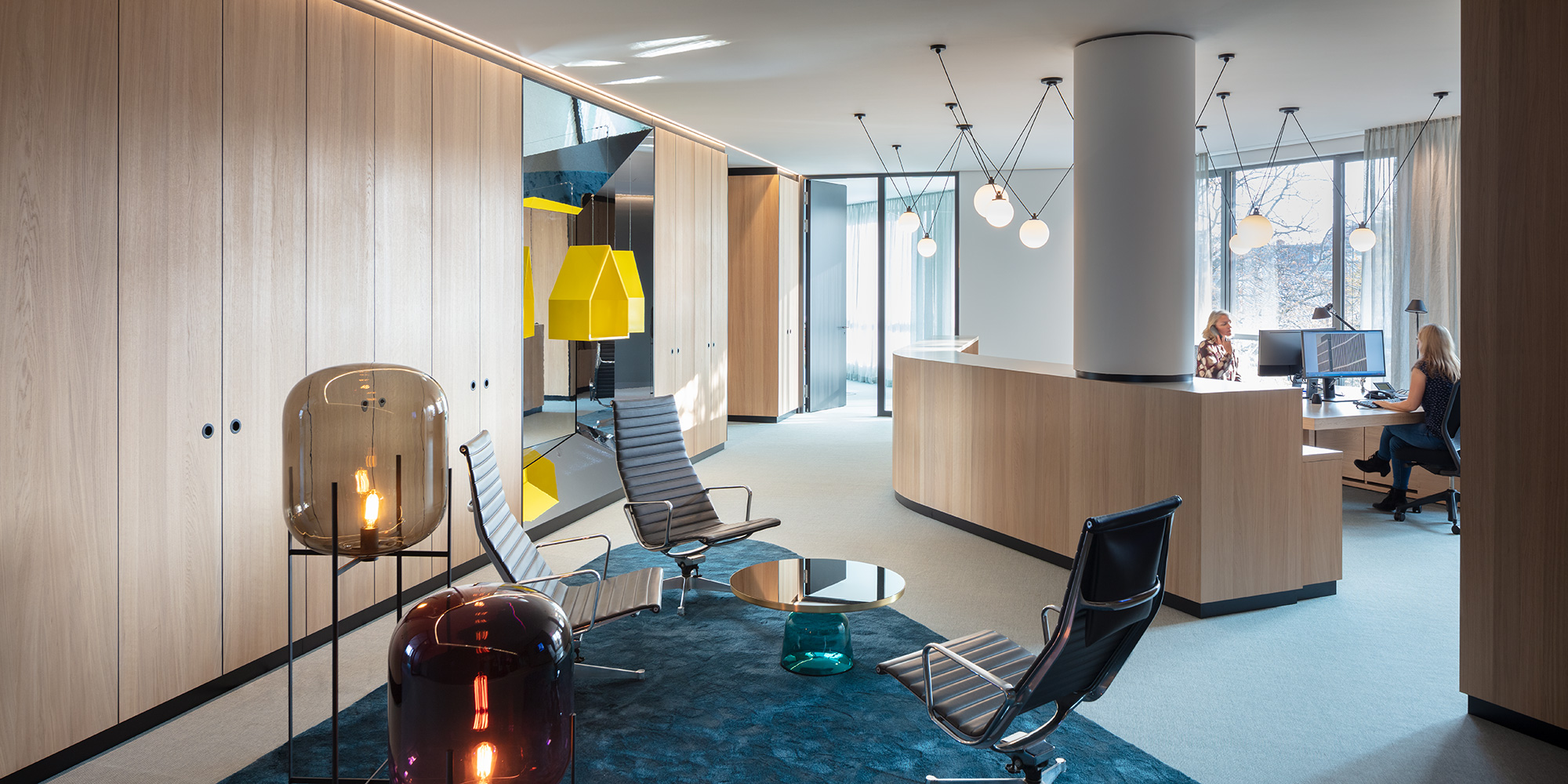
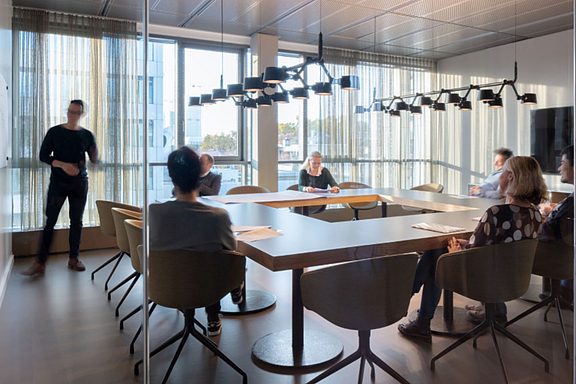
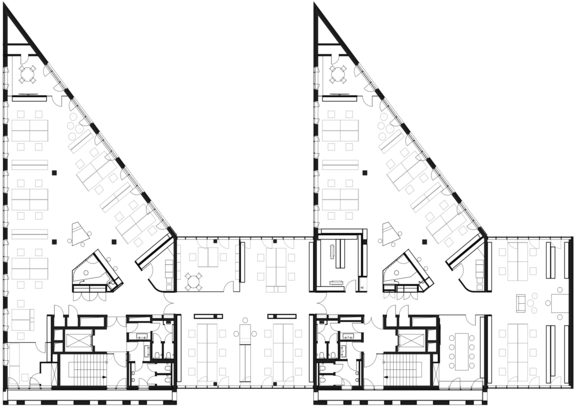
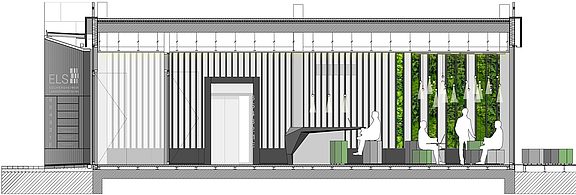
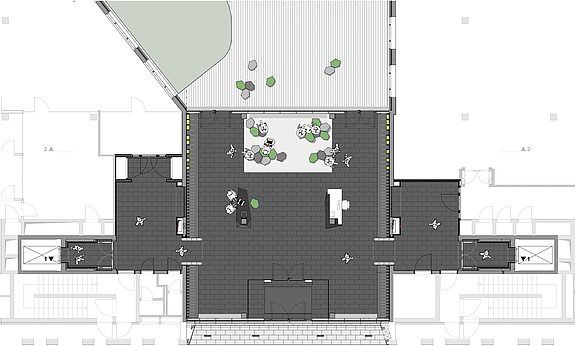
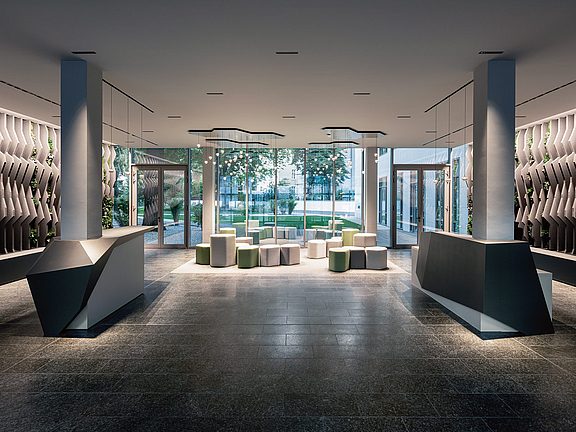
The foyer was austere and uninspiring. It was large, but lacked any appeal. A massive central reception desk obstructed the room's greatest feature: the view of the beautiful, large, green inner courtyard, which was unusual for an office building in such a central location.
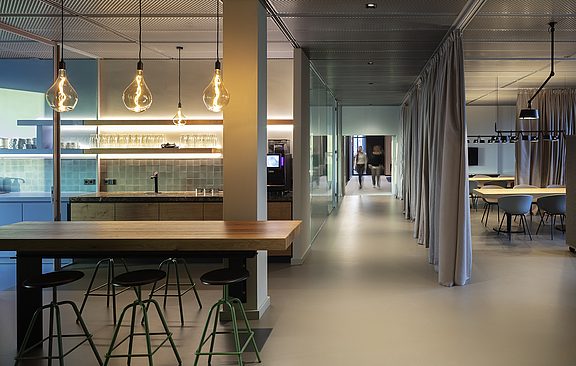
The redesign of the foyer into high-quality lounge areas and the opening onto the tenant garden as an attractive, quiet, green outdoor space in the middle of the city center were among the central elements of the revitalization of Eschersheimer Landstraße. Its redesign with the creation of high-quality lounge areas in the foyer and in the "tenant garden"

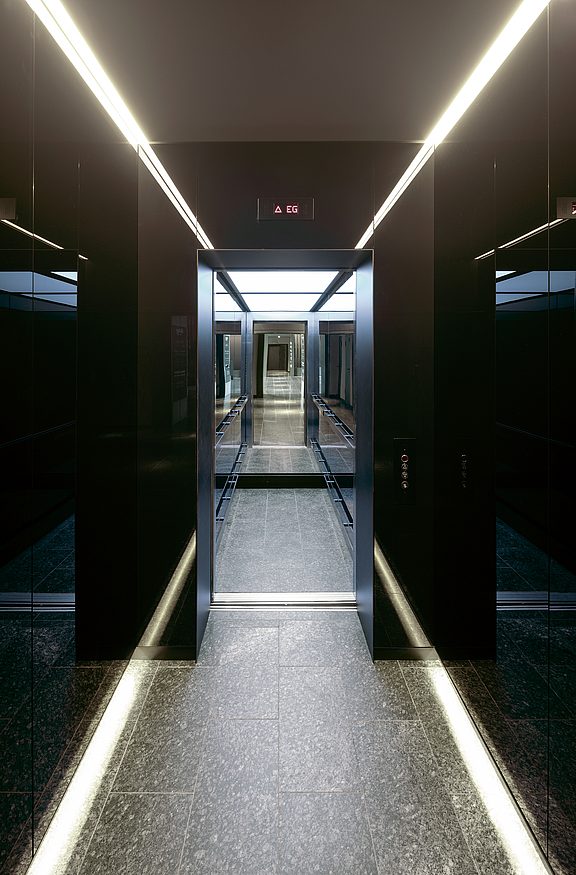
The entrances to the rental areas were the opposite of what you would expect in terms of atmosphere in a modern office environment. When you stepped out of the elevator and stood in front of the closed, low entrance doors to the rental areas, the entrance area seemed cramped and oppressively dark.
The low, closed access doors to the rental areas, which were only 2.10 m high, were replaced by 3.00 m high, glazed steel-framed doors with elegant narrow frames.
This single measure, which opened up the view into the rental area, created a completely new, light and bright room atmosphere. This completely changed the quality of the access.
The wall opposite the elevators was upgraded with glass cladding. The existing block frame doors, on the other hand, were retained and simply repainted. This enabled a significant improvement in the quality of these "reception areas" for the tenant at comparatively low cost.
The toilet facilities were fitted with new fixtures, new washbasins, and new flooring, and were brought up to date at moderate cost.
As with the expansion, carefully considered interventions were also made to the building services in order to optimize existing systems. Every single system was put to the test. The number of rental units had to be adjusted to accommodate smaller-scale rentals. The fire alarm system had to be completely replaced and the bus system control system had to be exchanged. All cooling ceilings were checked and all systems were serviced—always with the crucial questions in mind: What is the expected remaining service life of the systems? Is replacement justifiable from a resource conservation perspective, or is extensive maintenance the appropriate solution?