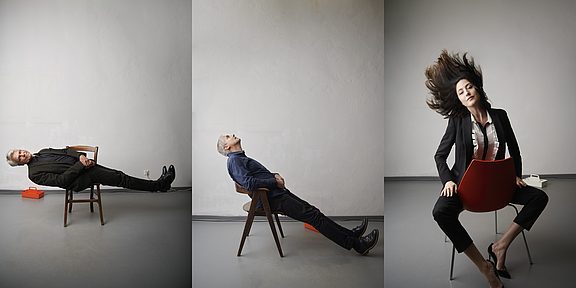
How we think. How we work. How we tick.
Martin Schapfeld, born in 1960, studied architecture at Darmstadt Technical University and is one of the founding members of hma. He joined the former Seifert Planung GmbH in Darmstadt as a project manager in 1997, where Holger Meyer had been a partner since 1990 and which later became the current firm. Prior to that, the North Rhine-Westphalian worked as a project management architect in various offices in Germany. Today, Martin Schapfeld manages the company together with Holger Meyer and Gregor Gutscher as managing director and heads the "operational division" of hma. In addition, he is responsible for the areas of organization, innovation, contract and quality management and is thus the central strategist in matters of organizational and innovation management.
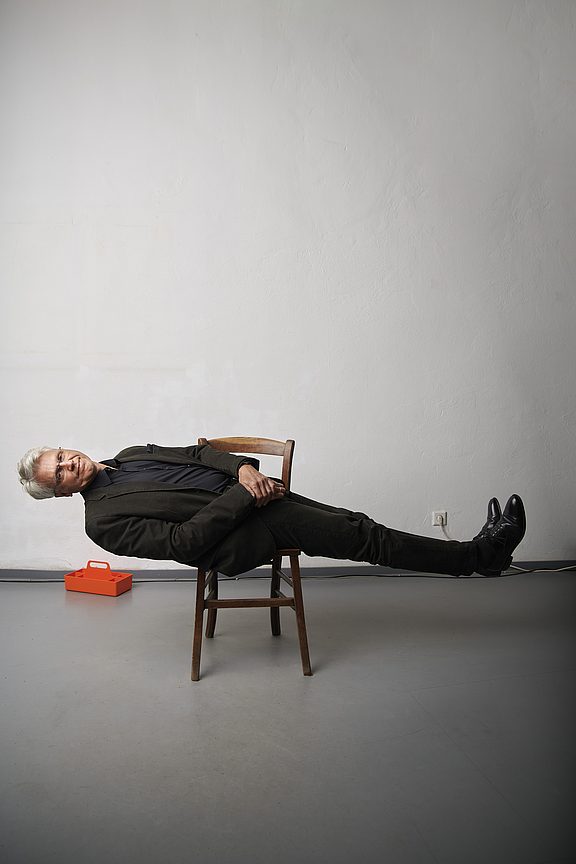
Martin, in preparation for our conversation, you jokingly said that you are working to ensure that "architectural firms are not synonymous with chaos." Through your work at hma, you are leading the company into the future in many different ways. Doesn't it get chaotic sometimes?
Martin Schapfeld (MS): (laughs) Well, I wouldn't rule that out, but not all chaos is creative chaos. Creative chaos is a popular way to describe the working environment of architects. But we have to separate the two areas. We create order with work structures in order to make room for creativity in planning. In addition, we have to cope with ever shorter planning times. It is therefore essential that we provide our employees with efficient structures, standards, and routines for completing the technical and organizational part of their work so that they have more space for the truly creative processes. After all, it is these creative processes that make us innovative as architects.
With so many employees and projects, how do you ensure quality?
MS: That is clearly a management task, both within the team and at the executive level. Clear communication, basic guidelines such as efficient knowledge management, integrated training, and easy-to-use tools. This saves our colleagues time every day, which ultimately benefits us in many ways. On the one hand, I increase the efficiency of individual projects and gain time—for more creativity, innovation, and satisfaction in the teams—but on the other hand, I also ensure economic success.
How do you implement this?
MS: We pursue a strategy of flexible standards that encompasses three areas: optimizing project work to create freedom, effective controlling in projects and within the company, and securing our structures through qualification. In addition, there are further measures in affiliated structures, such as BIM or, currently, from the ESG debate. In projects, we first look at how tasks can be completed efficiently. We do this across all service phases. Where do I need to invest time and find a good solution for the task, and where can I quickly and cleanly retrieve it from our standards? We combine the knowledge of over 100 specialists in our office, which is a huge resource, and we must and want to ensure that we can make this knowledge available to all employees through suitable tools. The introduction of efficient knowledge management is currently the biggest challenge internally. How do I make my employees' knowledge accessible to everyone without implementing a hydra of an object or data library with immeasurable effort? It is important for the project that nothing is blindly copied, but that its use is critically questioned. That is why we want to work with a digital catalog that only shows solutions that have been tested and quality-checked and approved internally by our experienced and responsible employees. These solutions are then continuously adapted to new guidelines and standards.
What is the key to economic success?
MS: In our project teams, we work within regulated communication structures. These are our internal project guidelines, which ensure that regular communication works both internally and externally. This enables us to identify problems early on in our complex projects and take countermeasures. On the other hand, we rely on project-accompanying controlling, which allows us to identify problems in the planning process at an early stage. We have defined interim goals in the project and work through these on checklists to keep the architectural quality, but also our costs and deadlines, under control. This enables us to identify at an early stage if something is going wrong. It is a constant comparison of target and actual values. We have already established this framework in our IT and project structure, which makes it easier for us to analyze our projects economically as they are being processed. We have also set up a higher-level economic control system and want to evaluate project data in an even more differentiated manner in the future. By analyzing our completed projects, we will be able to make even better assessments of recurring weaknesses and strengths and further optimize our internal processes in order to work even more efficiently and purposefully or to prevent errors from occurring in the first place, which ultimately gives the teams more time for creativity and innovation. That leaves the issue of qualification, and the shortage of skilled workers is another key factor here.
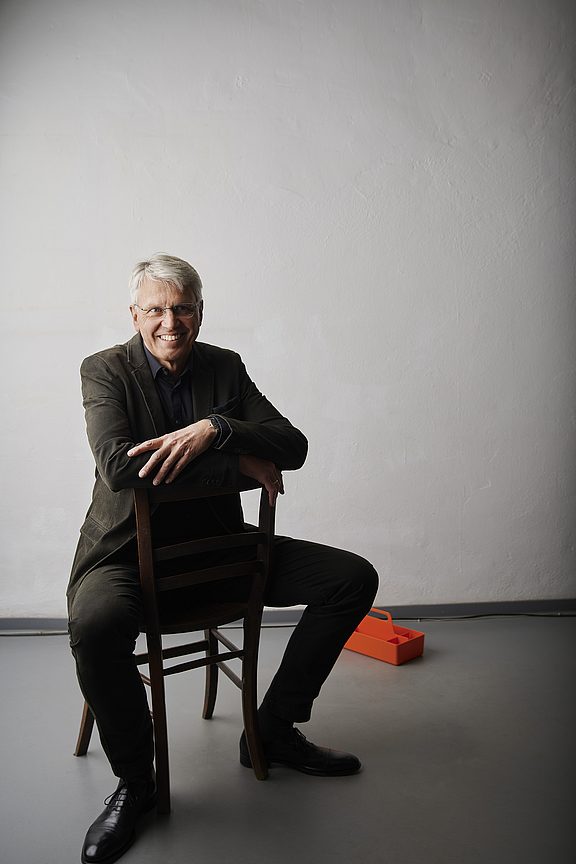
How are you tackling the biggest challenge facing the industry at the moment?
MS: Flexible working hours, the option to work from home when necessary and when the task at hand allows it, or simply being able to bring your dog to the office, are just as important today as opportunities for exchange and personal development. In order to avoid wasting a lot of money on unqualified personnel in a depleted labor market, we prefer to invest a lot of time and money in the training and further education of our own employees. We draw on the existing expertise of our own specialists and leverage the multiplier effect. When we identify someone in our teams who has special expertise, for example in fire protection, sustainable or barrier-free construction, we promote their qualifications and at the same time encourage them to pass on their knowledge to the teams. Within the team, it is then the task of the project or team leader to ensure that all colleagues are on the same level of knowledge. At a higher level, we organize training in workshops, such as on the topic of ESG, but also in video tutorials that we produce ourselves and make available to our employees on our own platform, the hma Learning Center. These are ten-minute clips on average that can be conveniently viewed at home. Regular use of this service is very important to us because we can only achieve a high level of qualification among our employees with easy-to-use tools. Conversely, ideas and suggestions for improvement from the teams and locations also flow back into our quality management system. This is a recursive process that requires a lot of effort. However, it is necessary in order to keep the quality and overall effort in the project and in the company under control.
Thank you very much for these interesting insights!
Detlev Reichelt, born in 1966, has been working as an architect for over 30 years. After initially working independently, the Bavarian native held various positions, eventually becoming office manager at well-known firms in Munich and working on projects throughout Germany. Since 2016, he has been office and team manager at the Munich branch of holger meyer architektur.
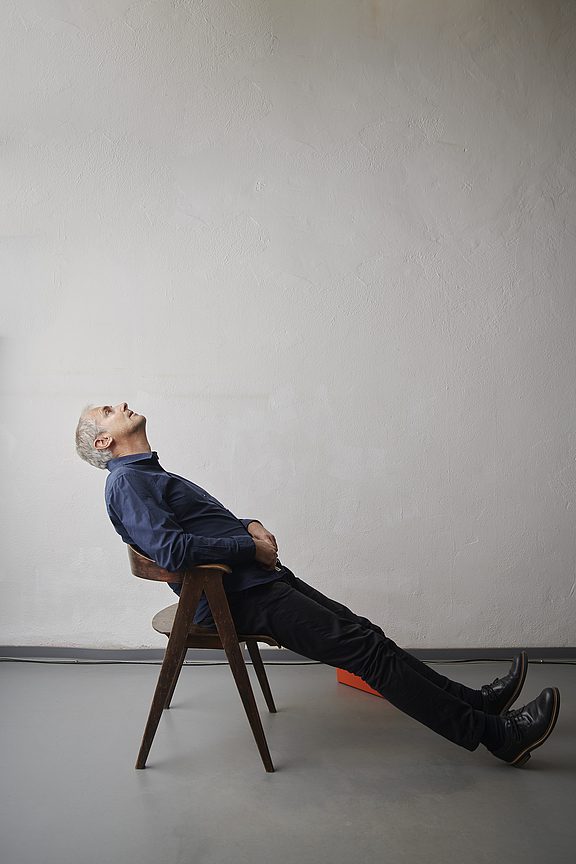
Office, team, and project manager for Munich projects—sounds like a comprehensive role. How did that come about?
Detlev Reichelt (DR): Gregor Gutscher called me back then. We knew each other from our time together at KSP. He asked me if I could occasionally supervise the expansion of a rental space in the capacity of a construction manager. At the time, I was still working as a freelance architect. After completion, Holger and Gregor offered me the opportunity to stay in the empty office space and set up the Munich location for them. I found that exciting and seized the opportunity that presented itself. Of course, we all realized at the time that it could be over very quickly. But the rent was low and there were plenty of projects. hma operates nationally from its base in Frankfurt.
What makes Munich so special that it even has its own office there?
DR: The order situation has remained good from 2016 to the present day, which is a good reason to operate locally. Commuting from Frankfurt to Munich is simply too time-consuming due to the distance. This is confirmed by our own experience from our first Munich project: it was discussed weekly in Frankfurt. That meant traveling there once a week in the morning, a four-hour meeting, and returning in the evening—not very effective. But what's particularly important, and this is where I come in, is that the authorities here are happy to have a "Bavarian" contact person. There are other ways of doing things, but this often works better and faster.

As you can easily see. How did that start?
DR: With a lot of personal commitment. I consistently performed well, took on responsibility, and didn't give up even when faced with setbacks. I was familiar with this from my time as a freelance architect. It was important for me to always take a long-term view, to concentrate fully, to look ahead so that I could see what was coming early on and avoid really bad mistakes. The dual control principle, or better still the triple control principle, still helps me today. I now share responsibility for the location with my colleague Alex Dömming, which takes some of the pressure off and allows me to focus more on the essentials. And last but not least: it's important to stay in a good mood and celebrate together from time to time.
What role do your colleagues in Frankfurt play? How do the locations work together?
DR: If the acquisition team in Frankfurt hadn't been so successful in securing orders for the Munich office, we would never have grown so quickly. We owe that to our colleagues Gregor, Raimund, and the entire competition team. Gregor's long-standing network through his work in Munich offices is also a great advantage in acquiring orders. After starting out as a Gallic village, we are now working on projects in an increasingly networked manner as a satellite. The pandemic has helped us make rapid progress in this regard, because at times personal interaction was no longer possible. Working together on the 3D model with defined planning interfaces also enables cross-project controlling, which we are currently integrating company-wide. This brings us a good deal closer to Frankfurt. However, it does not replace personal interaction and direct collaboration. The architectural profession needs sketch pads and pencils to be able to work creatively. Not everything works well via Teams.
How did you get started?
DR: We started out sitting on cardboard boxes with two large projects and a weekly meeting in Frankfurt. After the initial consolidation and the feeling that "now it works with six of us," thanks to our colleagues in Frankfurt, further competition successes in Freiburg and Munich quickly followed. And so we were once again on the lookout for new colleagues. In our first office, a small studio house in a backyard at Goethestr. 49 a next to the beautiful little Mariandl beer garden, we grew very progressively to twelve employees and worked on our projects at tables that were 1.40 meters wide in some cases. In 2019, after a long search, we came across a great office space on Kaiser-Ludwig-Platz and, after some carpentry work, moved in with beaming faces.
What distinguishes your Munich team?
DR: We have a fairly informal atmosphere, with a great team spirit and a willingness to help. Added to this is a high level of commitment. The size of the office allows for short communication channels, and you can always find open doors and someone to talk to when problems arise. The continuous development of employees in everyday project work is challenging. But here at hma, we have good structures that we can use. Some of the "senior" members of the team are helping the young newcomers to progress with patience and experience.
"OUR SEVEN MAJOR PROJECTS IN MUNICH ARE VISIBLE IN THE CITYSCAPE – WE ARE RECEIVING POSITIVE PUBLIC RESPONSE FOR THE FIRST TIME."
DETLEV REICHELT
How are your projects going and what is the current situation on the Munich market?
DR: Our seven major Munich projects are currently visible in the cityscape and, for the first time, we are receiving positive feedback from the public (Macherei audience award, Architektouren Easy Pasing). It feels really good, of course, to now be receiving recognition for all our hard work, especially in spoiled Munich. It became apparent several years ago that the development of new projects was becoming increasingly difficult due to a lack of land. The stricter subsidy conditions imposed by the city of Munich are even putting self-confident cooperatives in a difficult position, as the required low rents in conjunction with the high construction and financing costs can no longer be justified mathematically. The only residential construction project we currently have is the "Hoch der Isar" project, which is nearing completion. Future innovative areas such as the creative quarter or the well-known Werksviertel are ripe for development. Adjacent to the Werksviertel, we are currently working on two large office projects, Beat and Soul. Revitalization and conversion projects are currently trending in the market, such as the old concrete plant in Obersendling with its ingenious temporary use as "Sugar Mountain," where entire neighborhoods are being reinvented. Of course, we have enough expertise from our own projects. In the TIP innovation district in Taufkirchen, we are currently working on a large, inspiring existing project, where buildings that have been vacant for 15 years are being given a new lease of life.
What does your future in Munich look like?
DR: We now have around 17 employees, so there is still some room for growth. Due to the pandemic and the crisis, progress is naturally stagnating somewhat at the moment, and we are perhaps a little glad that things are not continuing at this pace and that we can consolidate.
Thank you very much for the interesting conversation!
Patricia Manea, born in 1989, studied architecture and business administration in her hometown of Bucharest. After completing her architecture studies in 2014, the young Romanian moved to Germany to join holger meyer architektur. Since 2017, she has been managing our office in Bucharest, which she played a key role in founding and designing. She is also the project manager for one of our largest current projects, the Börsenplatz Eschborn.

In 2014, you graduated with degrees in architecture and business administration, moved from Bucharest to Frankfurt in the same year, and started your professional career at holger meyer. In 2017, you founded an office in Bucharest for holger meyer—that sounds like you had clearly defined goals.
Patricia Manea (PM): I'm definitely a rather determined person. I always wanted to be independent, take responsibility for myself, and be self-employed. It was also time for a change in my life. So I decided to leave my home country right after graduating with a degree in architecture. I was young, wanted to be creative, apply what I had learned so far, and be successful. I love my hometown of Bucharest; my family lives there, and that's where I grew up. But I'm also not afraid of the
unknown and bigger challenges. After my interview with MSM, as the office was previously called, I packed my bags, flew to Frankfurt without much preparation, and things just fell into place. When you want to achieve something, doors open and the path becomes clear.
How did the idea for the office in Bucharest come about?
PM: I see it as a kind of moral obligation to give back to my homeland some of what it has given me. As an architect, I wanted to design projects in Bucharest and contribute to urban development. Soon after I started at MSM, I developed the idea for a new office location in Romania. I convinced the management with a detailed business plan. In 2017, we started from scratch. I took care of everything on site: registering the business, looking for office space, hiring employees—the entire administration. But I know my way around there, speak the language, and am familiar with the bureaucracy. What I didn't know yet, I learned quickly.
I traveled to Bucharest once or twice a month to coordinate the growing team there. We grew very quickly due to the good order situation in Germany. New construction activity in Romania was rather low due to the shortage of skilled construction workers there, and the labor market was manageable. In contrast, there was a high demand for well-trained skilled workers in Germany. So the employees of the Bucharest office were integrated into German projects.
How did you manage this integration? Are there differences in planning processes, building regulations, and working methods?
PM: Yes, of course. First, we had to train our Bucharest colleagues in German planning standards. In Bucharest, we work on LPH 2-5. One advantage was that the planning software we use is very common in Romania. This allowed us to focus on the important things during the training sessions. That was before Corona. We weren't using tools like "Teams" yet, so we invested a lot of time and money in training in Bucharest, but also in Frankfurt, where the new colleagues received the basic introductions. In addition to joint Christmas parties and summer festivals, this was also a good opportunity to network with the team in Germany.
And then came the pandemic...
PM: The pandemic turned everything upside down at first. However, thanks to our good equipment, we were able to switch to remote work very quickly. With the introduction of Teams, collaboration became completely new and very direct. The online learning tools from hma that were then introduced made integration into the project teams in Frankfurt and Munich all the easier. In addition, we now have experienced employees in Bucharest who play an integral role in training newcomers.
How is the Bucharest office organized?
PM: Very horizontally. I take care of everything organizational, administrative, and personnel-related. My team works on projects for the German offices as needed. Since we are an international company, we speak English in meetings. The respective project managers are responsible for the integration, training, and further education of our colleagues in Bucharest.
And how are you integrated into the projects?
PM: Integration into the projects takes place directly during capacity planning. Every two weeks, meetings are held with project managers and employees from Frankfurt and Bucharest. There, presentations are given on what has been worked on in the previous weeks – like a 360-degree feedback. This gives the more inexperienced employees a good introduction to hma's design and planning philosophy. During the project work, the team naturally exchanges information with each other on a daily basis.
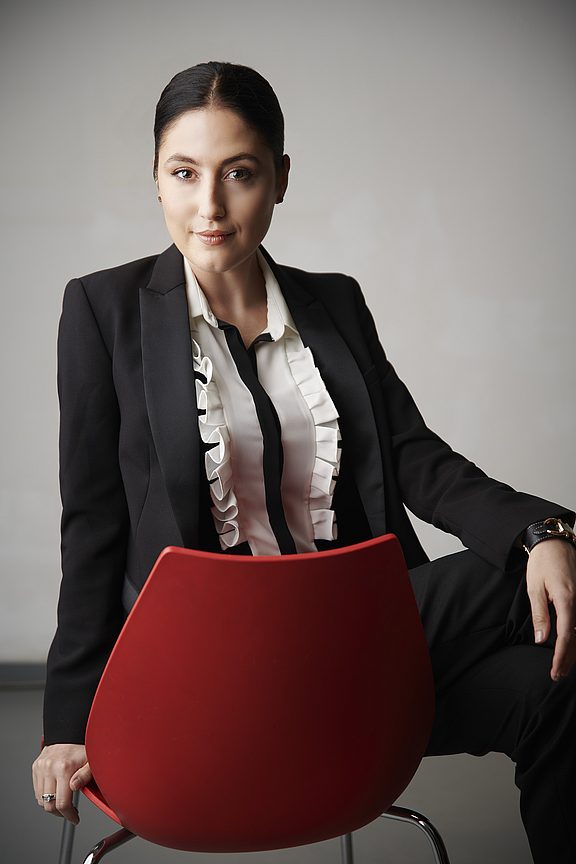
As project manager, you are also responsible for one of the largest and most complex projects currently underway at hma, the Eschborn stock exchange.
PM: Yes, that's my baby. I've been involved since the project started in 2017 and have witnessed the different phases the project has gone through. There have been many different concepts for different tenants, but the original idea of giving the Eschborn office location a new, vibrant center with a multi-use building and a publicly accessible square in the center has remained the same to this day. The project is technically very complex; we are planning it as an Efficiency House 40 – these are extremely high requirements that demand a lot of coordination and expertise. Much of the project is new to us, the client, the specialist planners, and of course to me as project manager.
How are you organizing yourself now?
PM: It wasn't so easy at first – suddenly I had a large planning team in Frankfurt to manage in addition to the ten-person team in Bucharest. In addition, three phases of the project were running in parallel at that time. So, in the beginning, everyday project work was rather hectic and very busy. However, I benefited from the fact that I had been involved in the project from the very beginning. I did a lot of the drawing myself, so I had a good overview of everything, down to the smallest details. That's rather unusual for a project manager who takes over a project at some point after it has been acquired. So
I knew my way around and kept track of everything – in the team, with the specialist planners, and with the client. That had an impact on the entire project. We are now in calmer waters and well on our way.
What else would you like to achieve?
PM: My dream of having my own projects in Bucharest was put on hold for the time being due to the pandemic, as I was rarely able to travel to Bucharest. If you're not there in person as a contact person, it's difficult to really get projects off the ground. But one day, I would like to plan projects in my hometown and give back some of what it has given me. And in doing so, also contribute to hma's international positioning.
Thank you very much for the interesting insight into your working world!